
Condensation
Wet windows most mornings
Moist indoor air can leave water on cold glass overnight. Poor ventilation can make it worse by letting moisture build up. Check how cold the room gets and how it’s aired overnight.

Ventilation, heating & cooling · Taranaki
Wet windows in the morning? Mould coming back around the sill? Learn what keeps surfaces damp, what different home systems do, and what to check next.
Condensation on the bedroom window glass and mould growing along the window frame and across the sill.
Condensation forms when moist air meets a cold surface. Heating and insulation can help keep surfaces warmer, while ventilation and extraction help carry moisture away. The pattern can guide what you check.
Moist indoor air can leave water on cold glass overnight. Poor ventilation can make it worse by letting moisture build up. Check how cold the room gets and how it’s aired overnight.
Check whether the extractor runs and vents outdoors. An installer can investigate a fan that runs but moves little air.
Poor insulation can leave walls and ceilings cold enough for moisture in the air to condense. Poor ventilation can make this worse by allowing moisture to build up indoors.
Can poor insulation contribute to mould?
What to check before retrofitting wall insulation
Note whether it changes after rain, shower use or a plumbing event. Recurring dampness in one spot can warrant a check for water entry.
Bathroom moisture
Use the numbered tips below to keep steam from spreading, vent moist air outdoors and dry wet surfaces after showering.
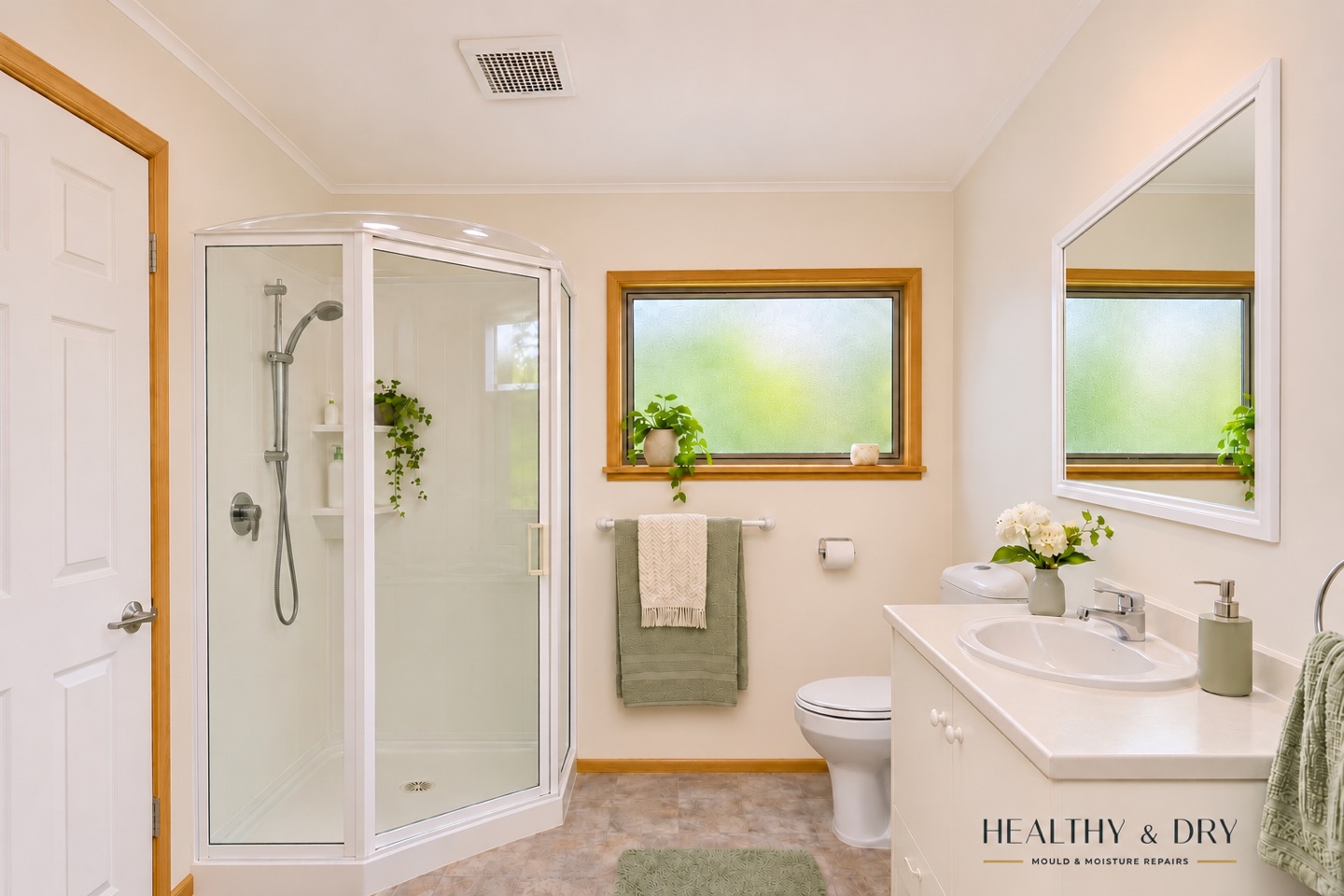
Enquire about a bathroom extractor fan
Further guidance from EECA on dampness and airflow (opens in a new tab) and Tenancy Services on heating and ventilation (opens in a new tab).
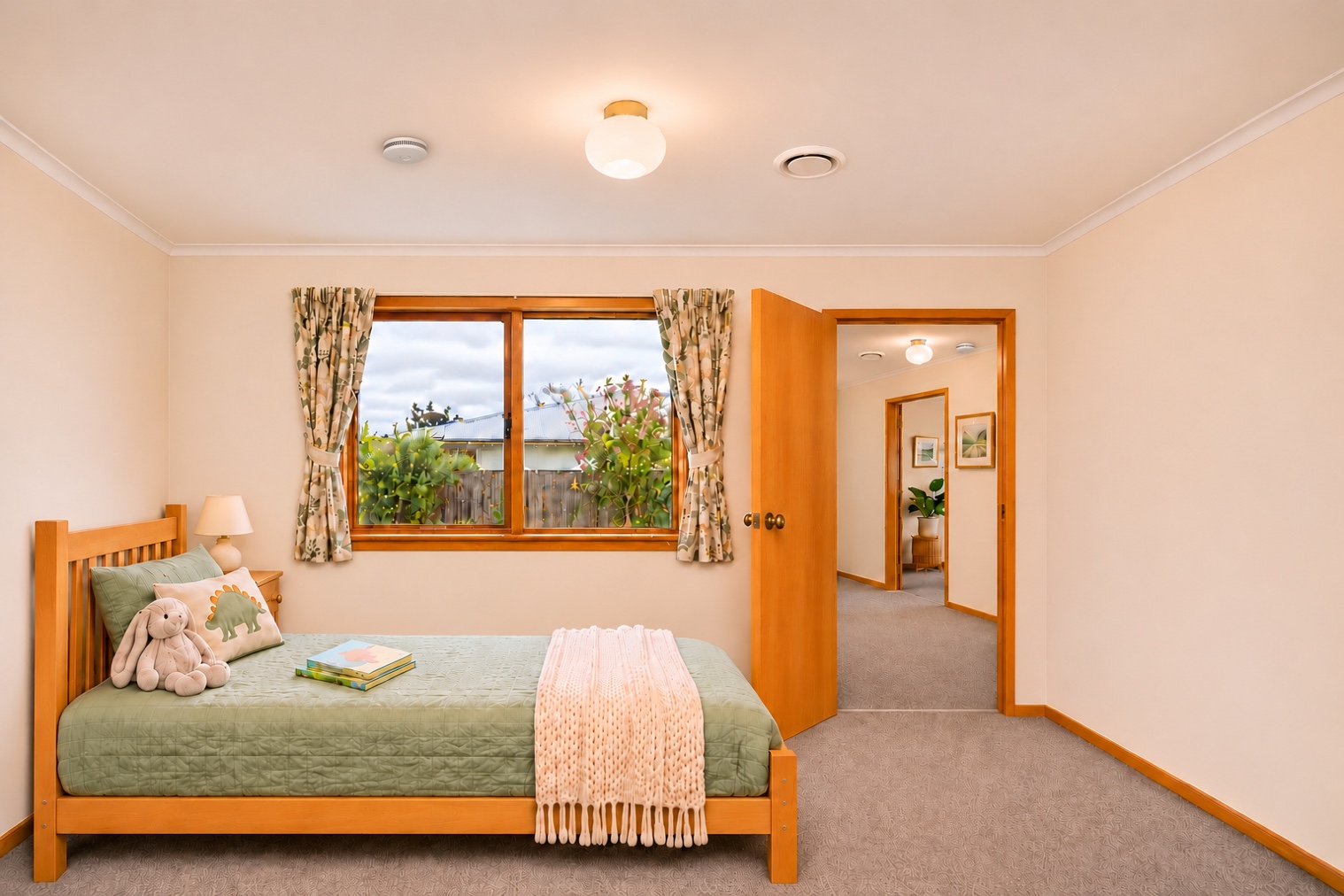
Bedroom moisture
Keep bedroom air moving and reduce the moisture that collects on windows, walls and ceilings.

HVAC stands for heating, ventilation and air conditioning. Heating warms rooms. Ventilation exchanges indoor air for fresh air and helps carry moisture away. Air conditioning cools rooms and can remove moisture from the air as it cools.
A home can have separate units for each job or equipment that combines some of them. A reverse-cycle heat pump provides heating and cooling. Heat-recovery ventilation uses warmth from the outgoing air to temper the fresh air coming in.
Replace stale, moist indoor air.
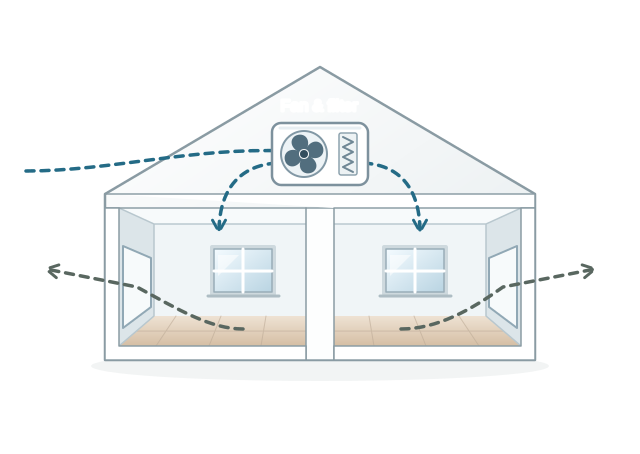
This positive-pressure system draws air directly from outdoors, filters it and supplies it to the rooms. Some positive-pressure systems draw air from the roof cavity instead of directly from outdoors. Indoor air can leave through gaps around windows and doors, even when the windows are shut. A bathroom extractor captures moist air where it is produced and vents it outdoors.
Domestic ventilation systems
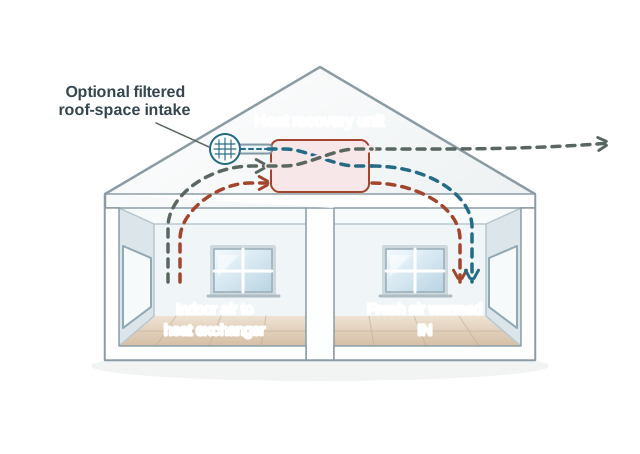
Balanced heat recovery supplies air to living rooms and bedrooms while extracting stale, moist indoor air. A heat exchanger transfers some warmth from the outgoing air to the incoming air while keeping the two streams separate. The stale indoor air is then exhausted outdoors. The setup shown draws air from the roof cavity and filters it before supplying it to the rooms. This intake is an option on some models.
Warm rooms in winter and cool them in summer.
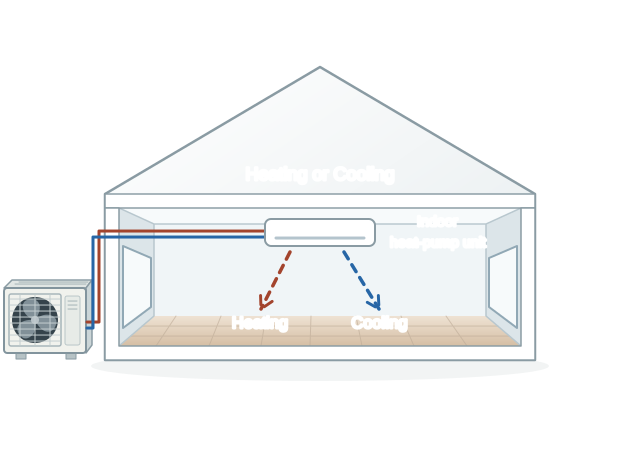
A standard room heat pump circulates room air and warms or cools it. If you need fresh air as well, check how ventilation is provided.
Share warmth from a room that is already heated.
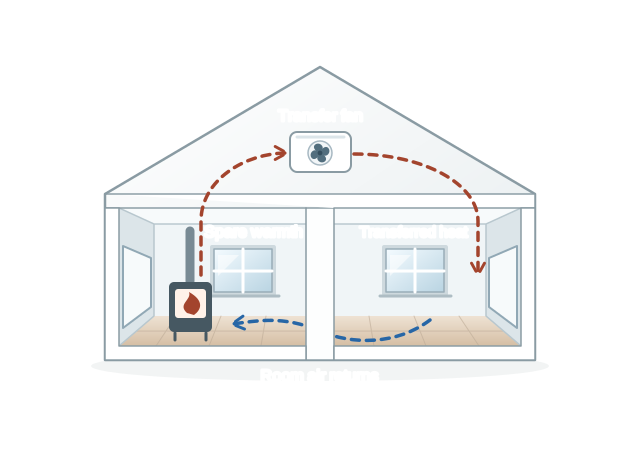
A fan and duct can move spare warmth from a heated room to another room. It depends on warmth already available from a separate heat source. Air needs a path back to the heated room so it can keep circulating.
The diagrams show typical air paths. An installer can explain how a proposed system would work in your home.
If you’re checking an existing system or comparing quotes, ask the installer to show you where air enters, which rooms it reaches and where it leaves.
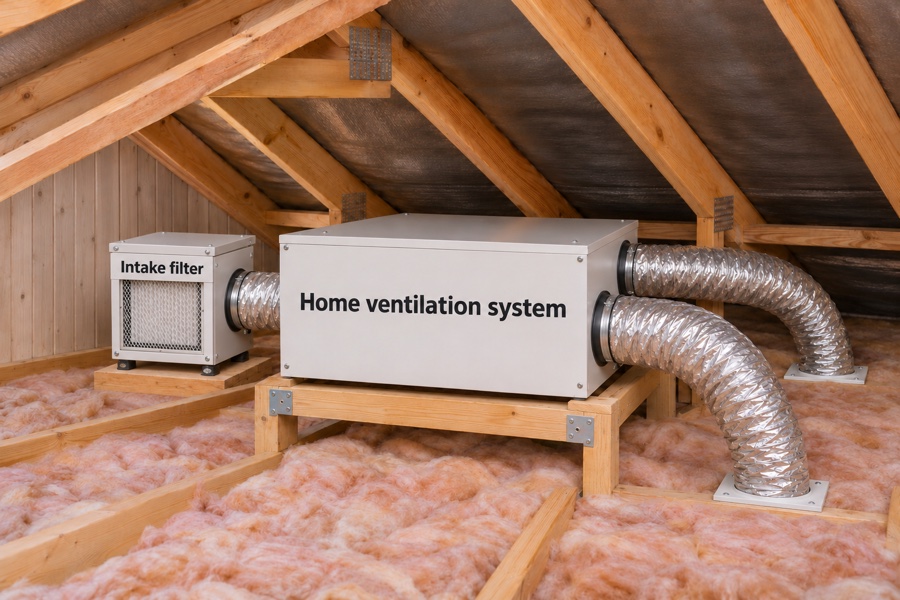
This positive-pressure system draws air from inside the roof cavity through a filter. Supply ducts carry the filtered air down into the dwelling. As the system pushes filtered air in, some indoor air flows out through small gaps and openings.
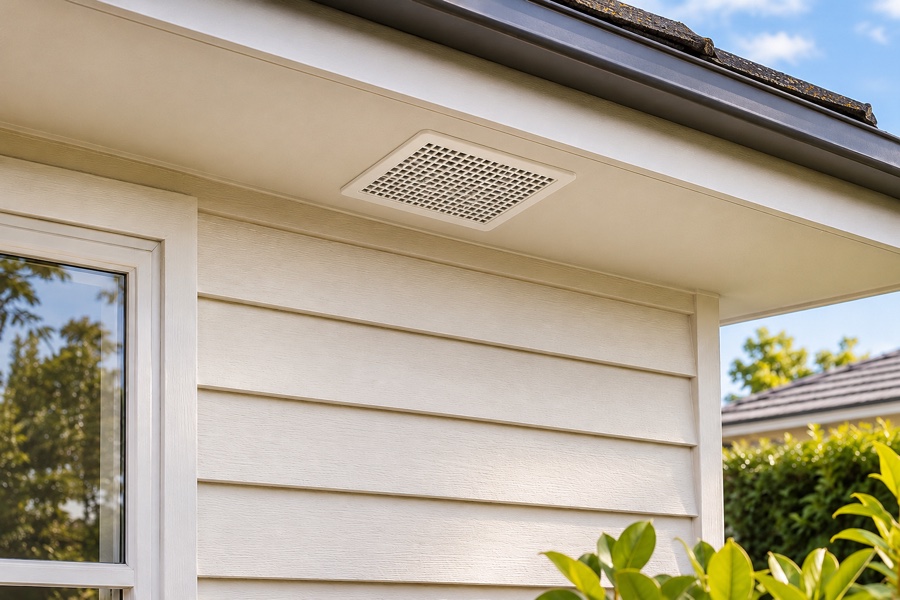
A ducted kitchen rangehood draws in moist air from above the cooktop, and a bathroom extractor fan draws it in from near the shower. Ducting carries the moist air outdoors. An outlet can be fitted in the soffit beneath the roof overhang or on an exterior wall.
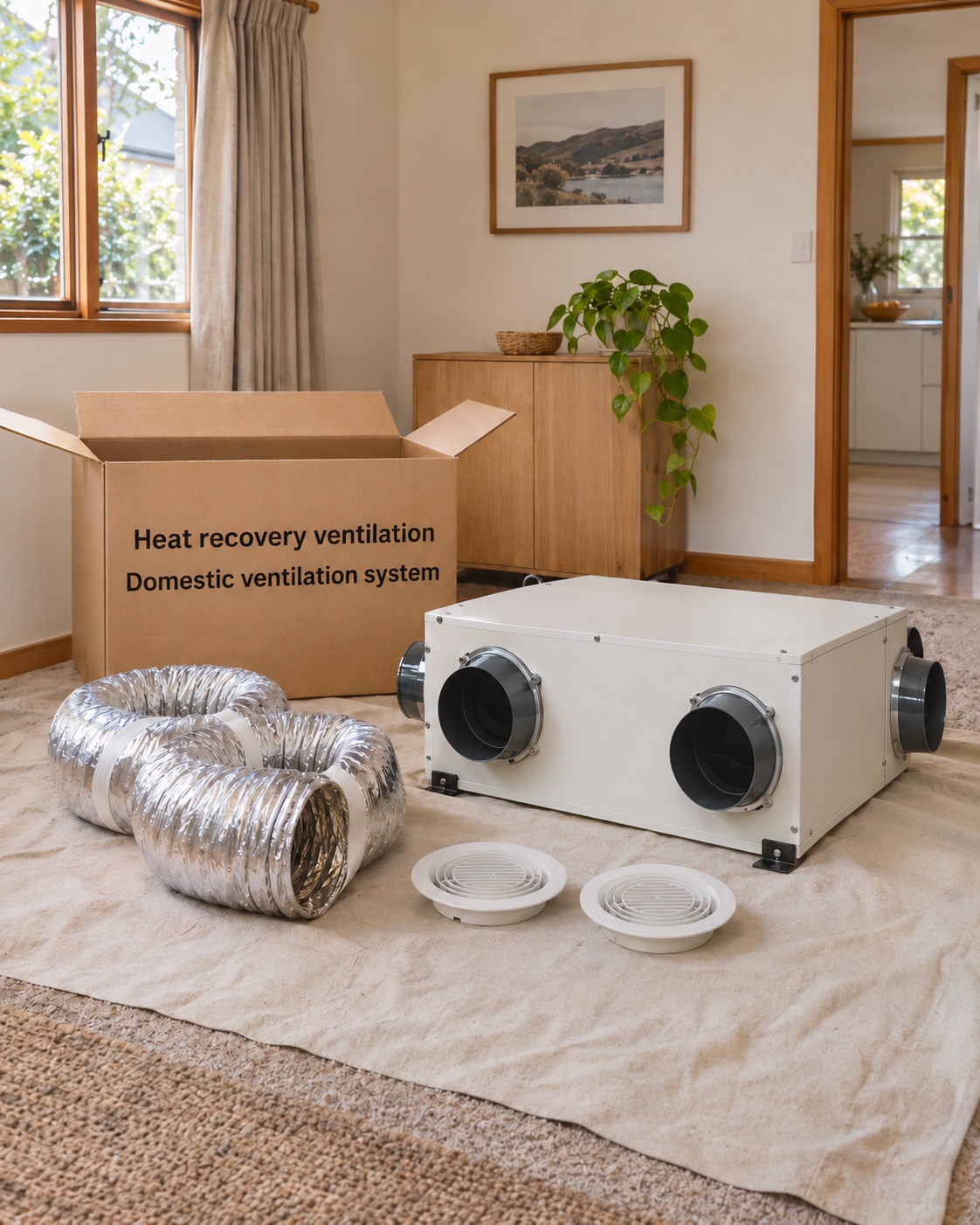
Ask Healthy & Dry for a callback and, with your permission, we’ll ask our ventilation partner to call you and arrange a home visit. The specialist will look at the system you already have and how it serves the rooms you’re concerned about.
They’ll explain whether servicing it, adding to it or replacing parts of the system could help, and what each option would improve before you decide whether to buy a new system.
Review your enquiry below. Nothing is sent until you confirm Send enquiry.
Nothing has been sent. Check your details below. If online sending is unavailable, email info@healthydry.co.nz, call 0800 111 944 or save a copy.
Downloaded summaries list filenames only; they do not include the files.
Wait for the confirmation before closing this page.
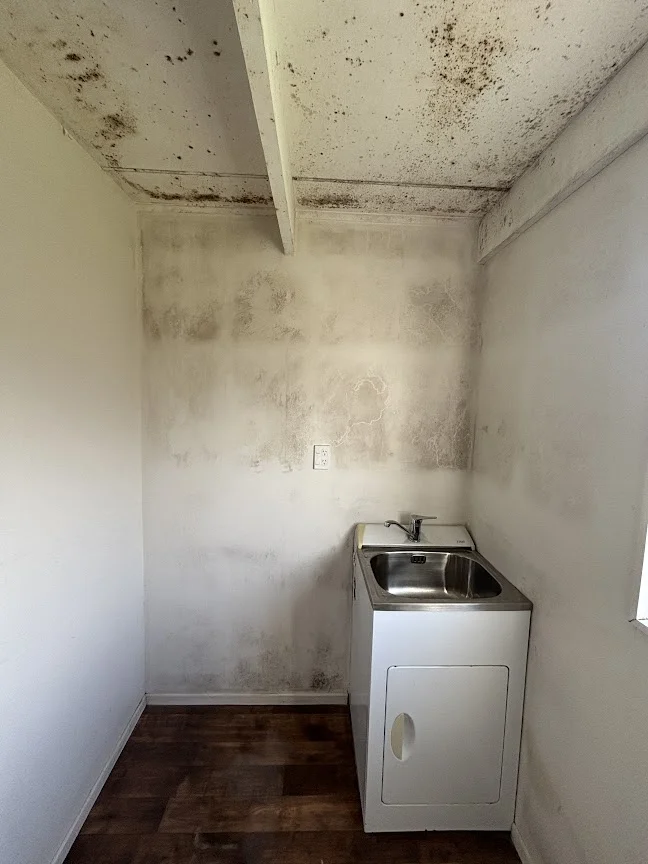
A typical pattern of mould growth on cold, uninsulated external walls.
Droplets across the inside of the glass in the morning usually point to condensation. Moist room air cools against the glass overnight. Note which rooms are affected and whether airing and heating the room helps it dry. A localised patch that gets worse after rain is a reason to check for water entry.
It can help if excess indoor moisture is contributing. If mould returns, check whether the surface stays cold, steam lingers or water is getting in. A leak or drainage problem needs attention at its source.
Usually, yes. Whole-home ventilation may bring fresh air in while a bathroom fan or rangehood captures steam where it is produced. Check whether your system includes extraction from those rooms and whether it vents outdoors.
Check that the fan vents outside and has a path for replacement air, such as a clear gap under the door. If steam still lingers, ask an installer to check the airflow at the grille and the condition of the duct. A fan that makes noise may still be moving too little air.
It depends on the layout. If a ceiling vent supplies air to the bedroom, that air needs a way out, such as a designed gap under the door or a transfer grille. If condensation or stuffiness is worse when the door is shut, ask the installer to check the airflow with it closed.
A dehumidifier can help dry a room by removing moisture from the air it circulates. Keep using kitchen and bathroom extraction to take steam outside, and ventilate to bring in fresh air. If dampness keeps returning, check for leaks or surfaces that stay cold.
Tell your landlord or property manager in writing. Note which rooms are affected, when the problem occurs and which fans or windows are hard to use. In most rentals, kitchens and bathrooms need extraction to outdoors, either through a fan or an eligible continuous system. Tenancy Services explains the rules and exemptions.
It depends on the model and how it was installed. Some systems draw directly from outdoors and some draw from the roof space. Find the model number and ask the installer where the intake and outlets are, and whether the system recovers heat.
The filter catches particles in the incoming air, such as dust, depending on its design. Check your system manual for how to access the filter safely and when to clean or replace it. If you notice condensation or a musty smell, check the airflow and where the moisture is coming from as well.
A clogged filter can restrict airflow. Check the manual for safe access and whether to clean or replace it. If the noise or weak airflow persists, tell a technician when it changed, which outlets are affected and the system make and model.
Check the manual for your model and controller. Some adjust automatically, while others have seasonal presets or a temporary boost mode. If the house feels draughty or condensation gets worse after a change, note the setting and ask your installer to check it. A temperature setting on a ventilation controller may control when the fan runs rather than heat or cool the room.
Tell Healthy & Dry which rooms are affected, what you notice and when it is worst. Include your contact number and the make and model of any existing equipment. With your permission, we’ll ask Rob Mason Electrical Group to call you.
Start with the problem. Ventilation exchanges air, a room heat pump changes the temperature, and heat transfer shares warmth already available in another room. If dampness is concentrated in one spot, investigate the moisture source before choosing equipment.
Write down the make, model, age and what has changed. Ask a technician to check the intake, ducting, filters and controls and explain what servicing, repair or replacement would achieve.
Yes, with a compatible design. The heating and cooling system controls temperature while the ventilation system exchanges air. Ask which rooms each system serves and how ventilation operates when the heat pump is off.
Start with any renovation records or insulation paperwork. Mould bands can show where parts of a wall stay colder, including where framing interrupts insulation. Ask an installer to confirm what is in the cavity and whether the wall is suitable for a retrofit before choosing a method.
External wall insulation retrofits generally need building consent unless the council grants a specific exemption. This applies whether you blow in fibre or fit batts when the inside lining is off. Ask the installer who will deal with the council before work starts.
Ask the installer to size it for the rooms you use and the heat they lose. Room area matters, along with insulation, glazing, ceiling height, sun exposure and local winter temperatures.
It depends on the layout and airflow, especially when doors are shut. Ask which rooms the proposed setup is designed to heat and compare separate units or ducted options if bedrooms need reliable warmth.
Identify when the sun heats the room and whether you can let in cooler outdoor air safely. Shading reduces heat coming in, and a fan can improve comfort. Air conditioning may help if the room still needs active cooling.
Have the fault assessed first. Note any noise, error codes, leaks or loss of heating, plus the model and service history. Compare the repair with the unit’s condition and how well it meets the home’s current needs.
No. Use the manual for routine filter care where access is safe. A technician can investigate faults and check parts of the system beyond the filter.
Discuss bedrooms, neighbours and quiet hours before equipment is positioned. Mounting, fan settings and duct layout affect sound. Have new vibration or rattling checked and keep grilles clear.
The weather, heat loss from the home, efficiency of the unit, temperature settings, hours of use and electricity rate all matter. Ask what assumptions an estimate uses so you can compare it with your own situation.
The indoor unit needs a clear path to circulate air through the intended space. The outdoor unit needs airflow, drainage and room for servicing. Ask the installer to show you the proposed locations and consider sound near bedrooms and neighbours.
A suitable model can. Ask how much heat it delivers at local winter temperatures. Brief pauses during defrost can be normal. If the room regularly fails to reach the set temperature, have the system checked.
It can help if another room has spare warmth and air can circulate between rooms. Ask what improvement to expect with bedroom doors closed and how those rooms will stay warm when the source heater is off.
Have a qualified installer check the proposed setup first. Moving air can change room pressure and affect how a heater draws air or vents combustion gases. Tell the installer about every gas heater, wood burner and open fire in the home.
Some controllers only run the fan once the source room is warm enough. Check your model’s manual and note the controller setting and when the change happens. If it persists, ask a technician to check it.
Often, if there is space to run ducts and a path for air to return to the warm room. Show the installer your floor plan and heater location, and ask where grilles and any access openings would go.
It moves heat from the air into water stored for taps and showers. The inverter varies the compressor speed as needed. It is a separate system from a heat pump that warms rooms.
An all-in-one unit houses the heat pump and cylinder together. A split system has an outdoor heat-pump unit and a separate cylinder. Compare the space, airflow and pipe routes each option needs.
Sometimes. Ask the installer to check the cylinder’s condition, capacity, pressure and compatibility with the model. Some systems need a matched cylinder.
Ask the installer to size the cylinder and reheating capacity for your busiest periods, such as several showers in a row. Compare performance at local winter temperatures and ask how any backup heating works.
Compare the installed price and ongoing care costs with expected electricity use for your household. Hot-water demand, electricity rates, winter performance and use of backup heating can all change the estimate.
Choose a location with the required airflow, drainage and service access. Ask how the fan and compressor will sound near bedrooms, outdoor seating and neighbouring properties.
Follow the manual for the heat pump and cylinder. Ask what you can safely check, when to book a service and which sounds are normal. Report leaks or a sustained drop in hot-water supply.
Ask who will handle the plumbing, electrical work and any specialist refrigerant work. Check that the quote sets out the equipment, cylinder and connection work, drainage, removal of old equipment and handover.
