Healthy & Dry - Mould & Moisture RepairsHealthy & Dry

Ask AI - Search

Typing stays in this open page and is not saved. Only submitting an AI question sends and saves it.

Mould cleaning and treatment

Mould removal and treatment

Visible mould, damp-affected surfaces or growth that keeps returning? We clean and treat suitable affected areas and consider the moisture conditions behind the problem.

Cleaning addresses existing growth. Reducing recurrence also means addressing the moisture conditions that support it.

Get a free mould removal quote
DIY Lab mould test kit

Collect a surface sample at home for laboratory analysis.

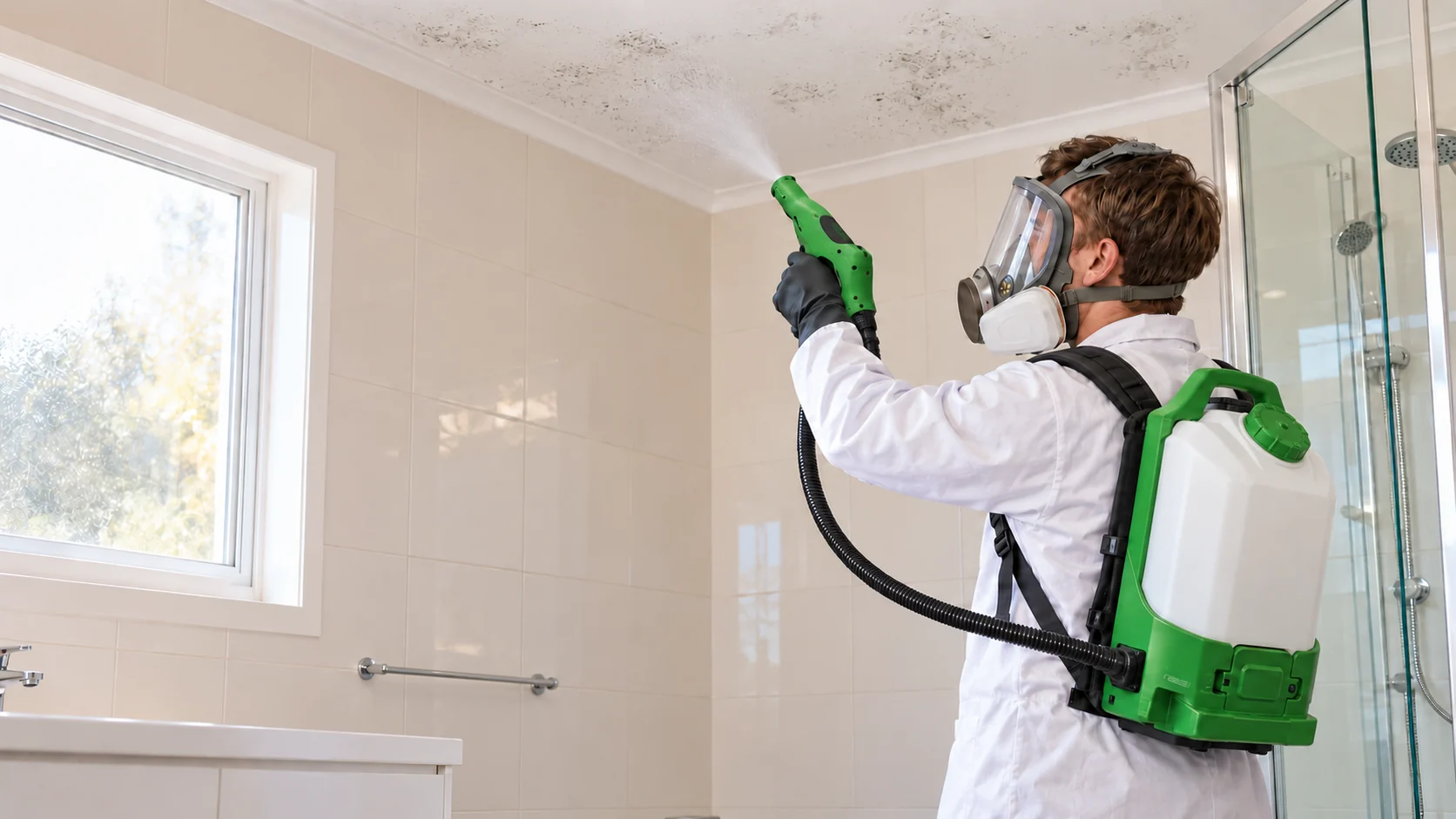
An operator in a white overcoat and full-face respirator uses a green backpack electrostatic sprayer to treat light scattered mould on a bathroom ceiling.
Mould removal and surface treatment, with attention to the underlying moisture.

Costs and timing at a glance

Treatment pricing

Mould removal and treatment

Single-room ceilings and walls
$350 - $495including GST (NZD)
Selected areas across several rooms
As per quote

Your quotation confirms the affected areas, surfaces and treatment scope. Drying and repairs are quoted separately.

What treatment can include
  • Preparation and protection of the agreed work area.
  • Physical cleaning of accessible mould-affected surfaces.
  • HEPA vacuuming where appropriate to the agreed scope.
  • Suitable surface treatment and drying.
  • Cleaning affected frames, sills and extractor surrounds where included.
  • Completion photographs and recommended next steps.

Some porous or water-damaged materials need repair or replacement. We identify where surface cleaning alone is unlikely to be enough and quote any associated repair work separately.

Agree the work before it begins

  1. Describe the problem. Send the town, affected rooms and photographs if available.
  2. Review the affected areas. We consider access, materials, moisture conditions and whether further investigation is needed.
  3. Agree the quotation. Confirm the treatment, any repairs and price before work starts.
  4. Complete the agreed work. Treatment and drying follow the needs of the surfaces, with practical next steps explained.

Treatment and repairs are quoted separately. Any further investigation or testing is scoped and priced with you before proceeding.

Typical treatment time

Mould removal normally takes a couple of hours. We aim to complete the agreed rooms in one visit. We agree access and when the treated rooms can be used again. Laboratory testing has a separate sample-return and reporting timetable. See the testing page for current arrangements →

Selected-area treatment covers the localised patches agreed across the rooms. Your quote is based on the affected area, surface and severity. Drying and repairs are quoted separately, with their own timing.

With access agreed beforehand, you can be at work during treatment. Occupants must stay out of the treatment area; we confirm when the rooms can be used again.

We confirm the scope, price and access arrangements in your quotation. Site visits and repair quotes are free.

Read about costs, timing and using your rooms →

Before work starts, we agree which rooms need to be kept clear and when they can be used again. Tell us about occupants, pets and any essential room access. We explain protection, ventilation and any drying or re-entry requirements for the treatment being used.

Your first step

Free repair quotes and paid mould assessments

Get a free quote for repair work, or book a paid assessment to investigate the mould and receive written findings.

Free

Repair quotation

Free repair quote

A site visit to look at the visible damage and quote for the proposed repair work.

Free

Ask for a free quote
  • Site visit to discuss repairs
  • Proposed scope of work
  • Written repair quotation

Paid assessment

Insurance claims

Mould assessment and report

Investigate likely causes, record findings and get practical recommendations for your property.

From $339.25 including GST

Visa Mastercard Apple Pay Google Pay Afterpay - coming soon Klarna

Klarna for eligible personal purchases · Afterpay coming soon

Explore mould assessments
  • Observations, photographs and readings
  • Explanation of likely causes
  • Written findings and practical next steps

Ask a question

Typing stays in this open page and is not saved. Only submitting an AI question sends and saves it.

A real job · New Plymouth

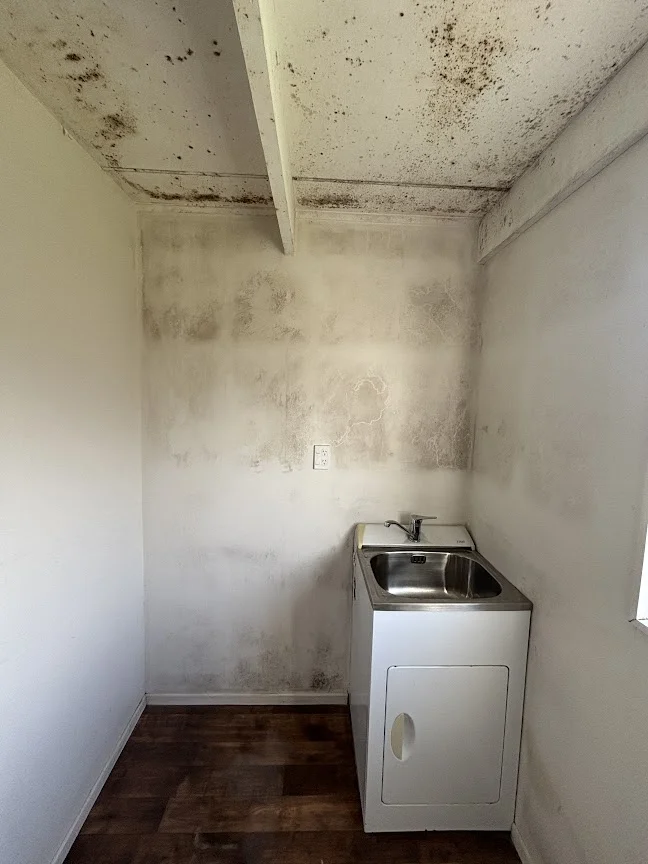
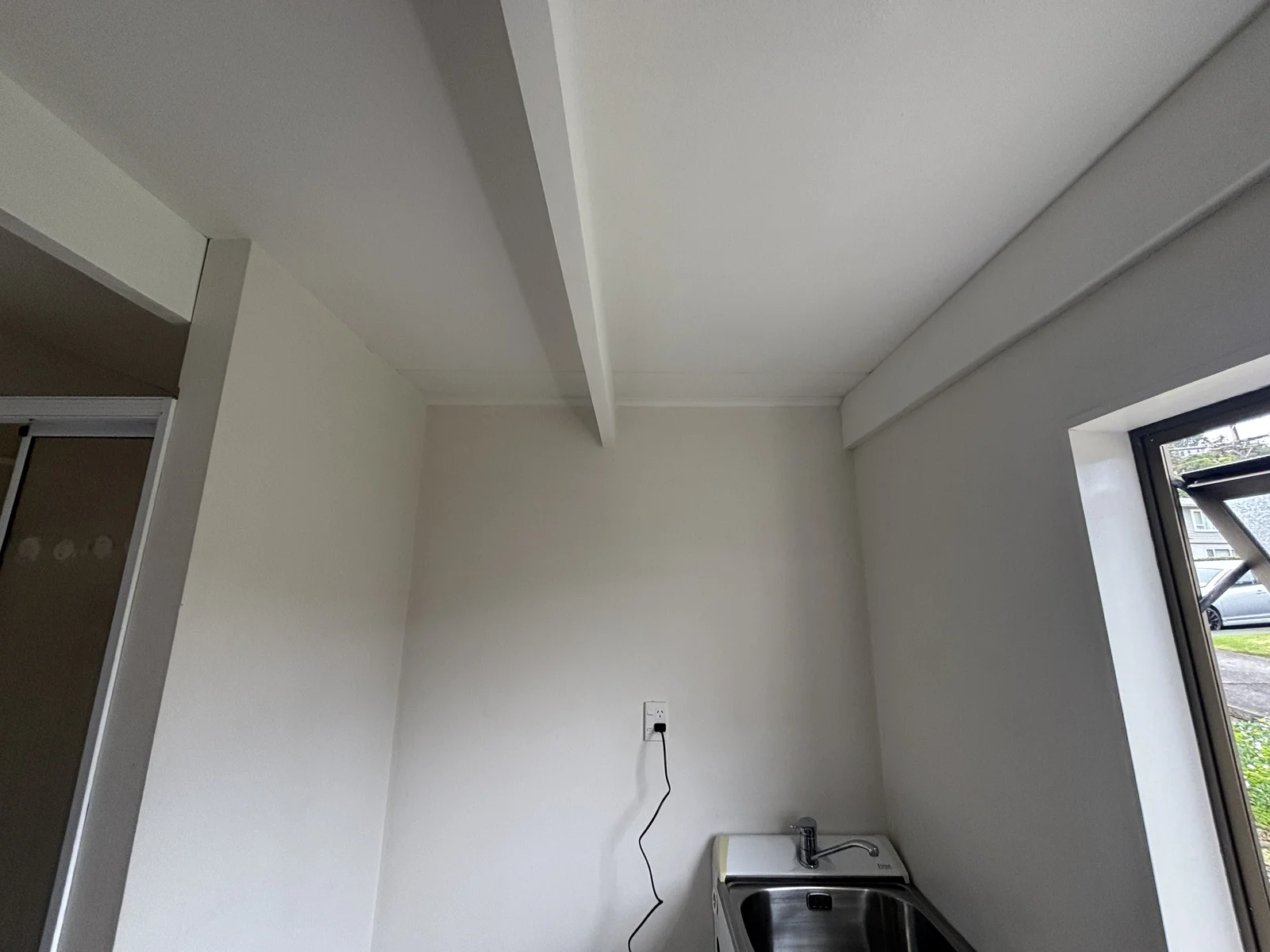
Laundry mould: before and after

Before-and-after photographs from a New Plymouth laundry, showing the ceiling and walls before the work and the finished appearance afterwards.

BeforeVisible mould across the ceiling and walls.
Before: extensive dark mould spotting on the laundry ceiling, beams and walls above the tub.
AfterA wider view of the same laundry, showing the finished white ceiling, beams and walls.
After: the laundry ceiling, beams and walls have a clean white finish, with the laundry tub below.
Why does mould form lines or patches on a wall?

Uneven wall temperatures and moisture can contribute to lines or patches.

The before photograph shows a repeating pattern of darker patches and lighter bands. Uneven wall temperatures can help explain patterns like this. Missing or poorly fitted insulation can leave parts of a wall colder, allowing moisture from the room to collect there and support mould growth.

Wall framing and the spaces between it can have different surface temperatures. Depending on the construction and insulation, the colder areas may follow the framing or appear between it. Heat escaping more readily through part of the structure is called thermal bridging. The pattern is a reason to check the wall, rather than proof of its insulation condition from a photograph alone.

Cleaning addresses the visible growth, but lasting improvement also depends on the moisture conditions. Consider insulation, heating, extraction and airflow together, and investigate any signs of leaks. A clean painted finish does not establish that an insulation or moisture problem has been resolved.

Read about ventilation and condensation or discuss mould and moisture damage.

Further reading: BRANZ: thermal breaks and bridges (opens in a new tab) and MBIE: insulating your home (opens in a new tab).

A real job · New Plymouth

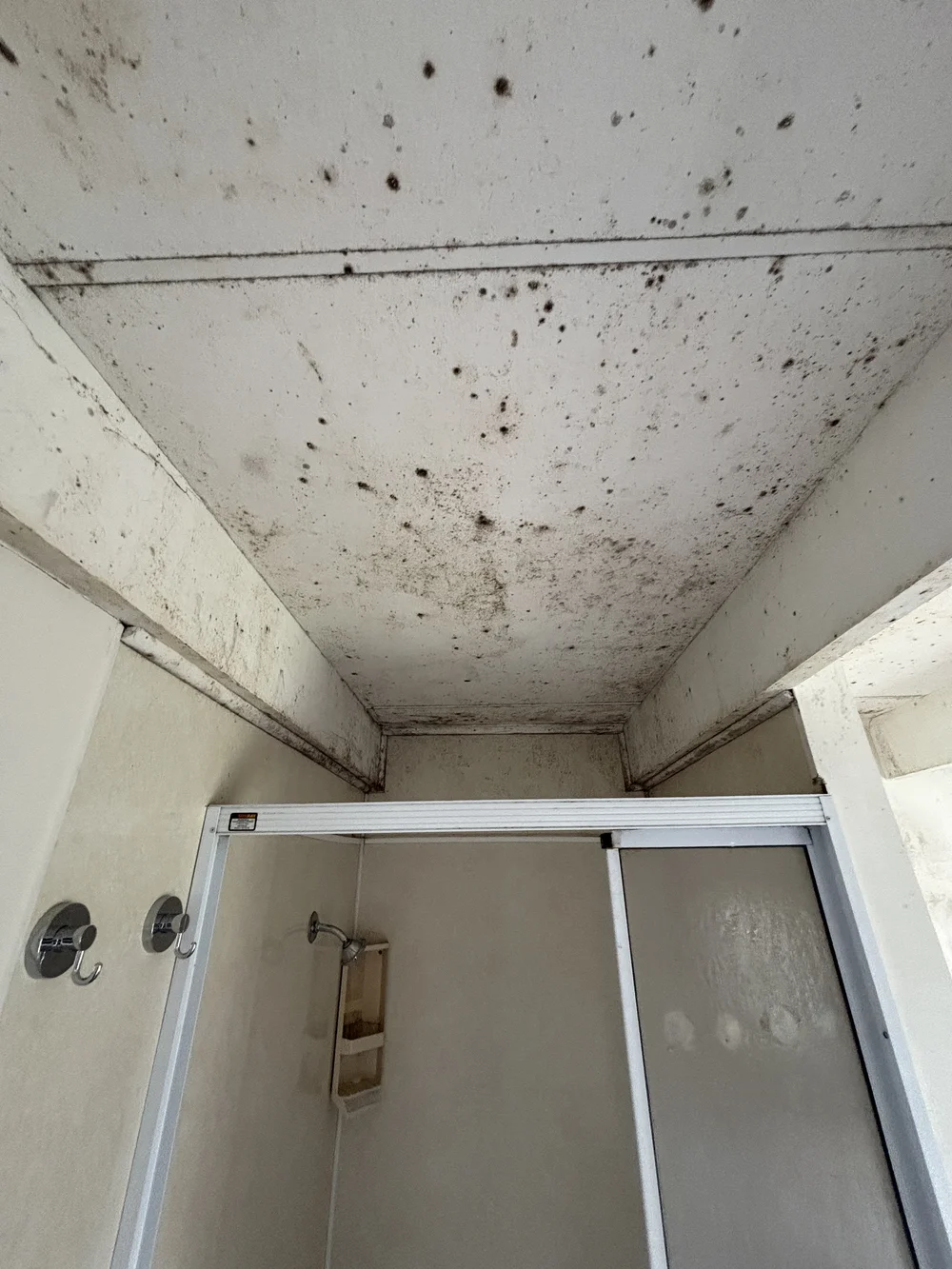
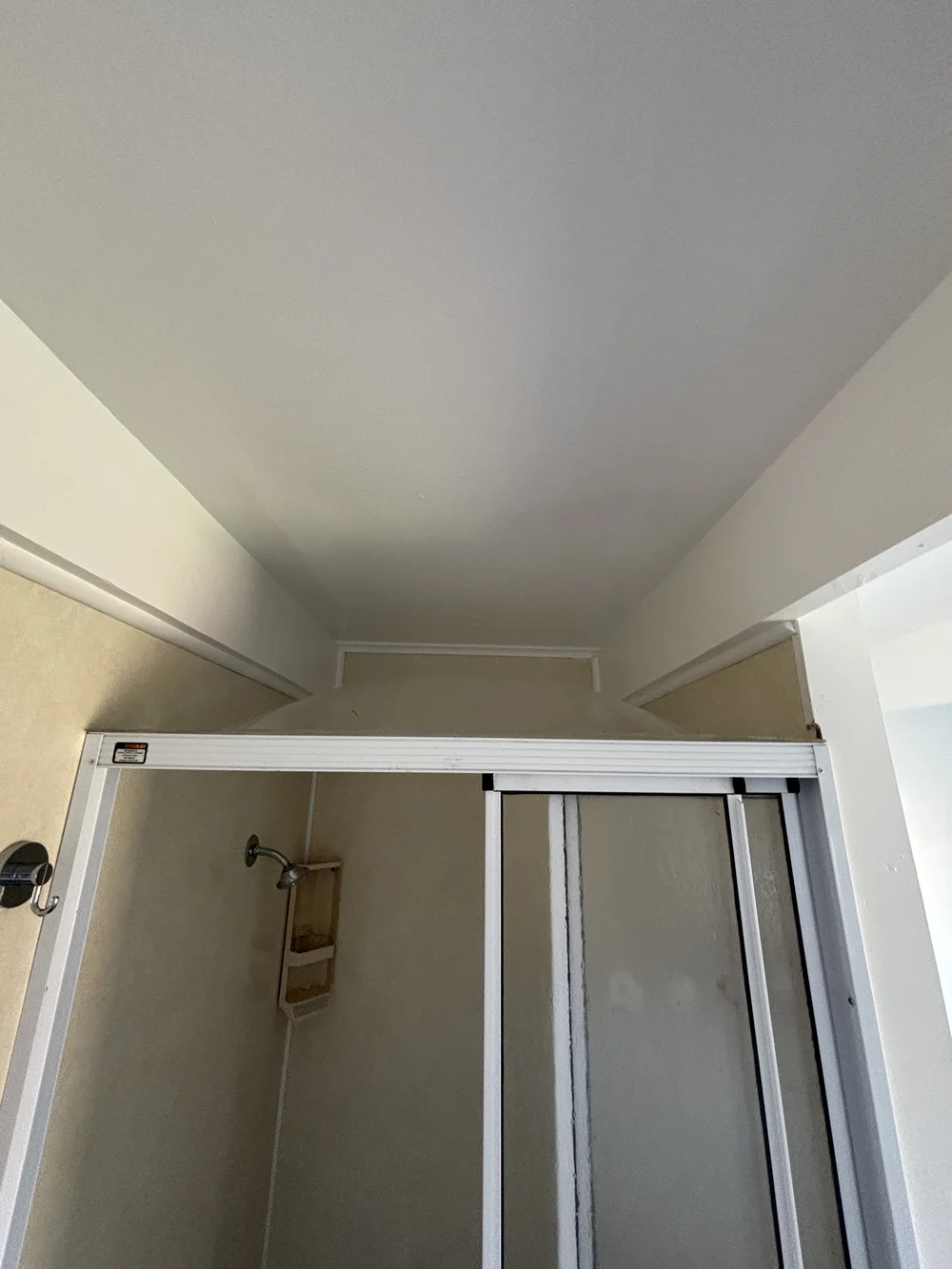
Shower ceiling: before and after

These photographs show the ceiling above a New Plymouth shower before the work and its finished appearance afterwards.

BeforeVisible mould across the ceiling and surrounding surfaces.
Before: widespread dark mould spotting on the ceiling and upper surfaces above a shower enclosure.
AfterThe same shower ceiling with its finished white surface.
After: a clean white ceiling above the same shower enclosure.

A real job · New Plymouth

Bathroom walls: before and after

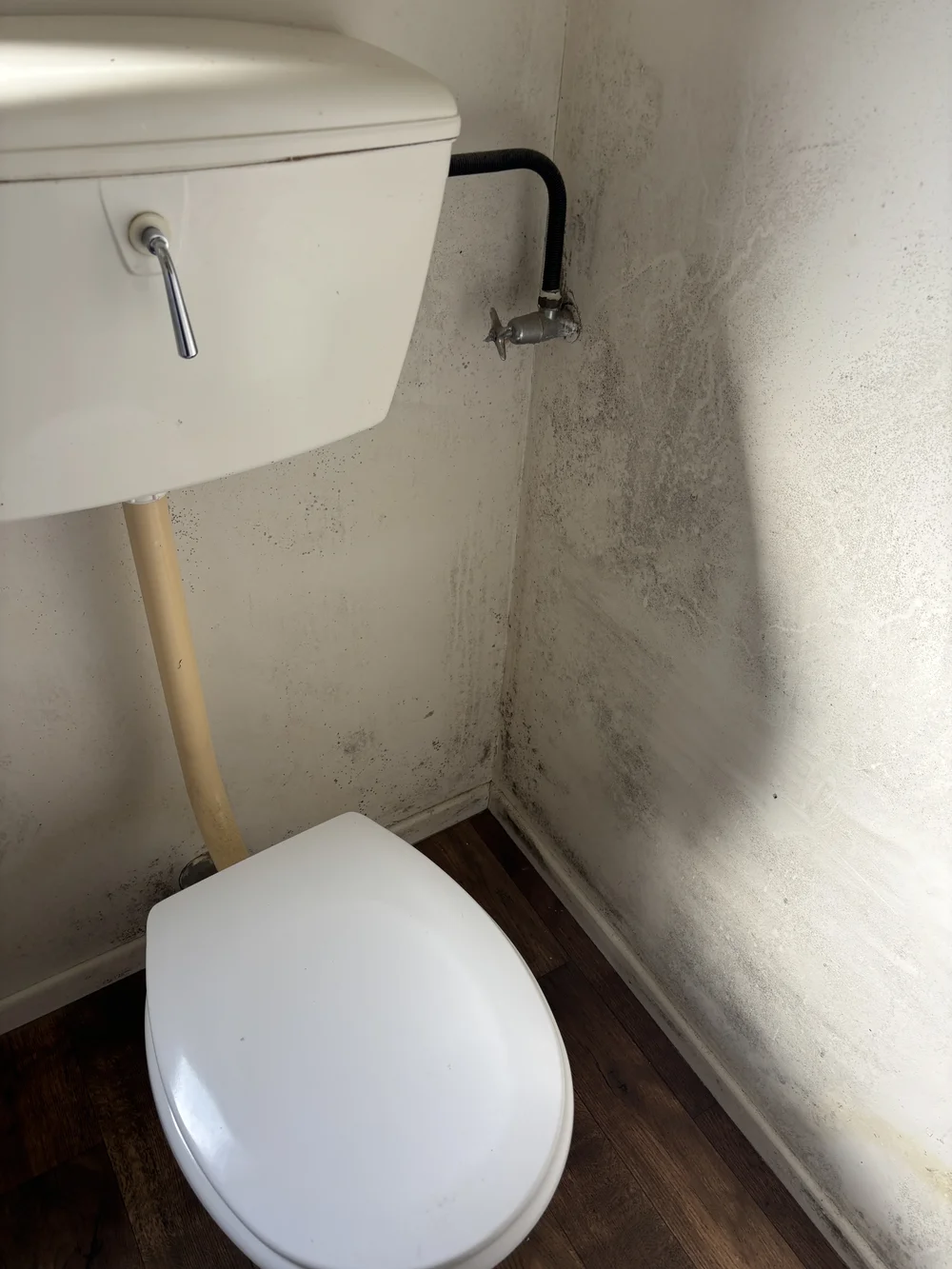
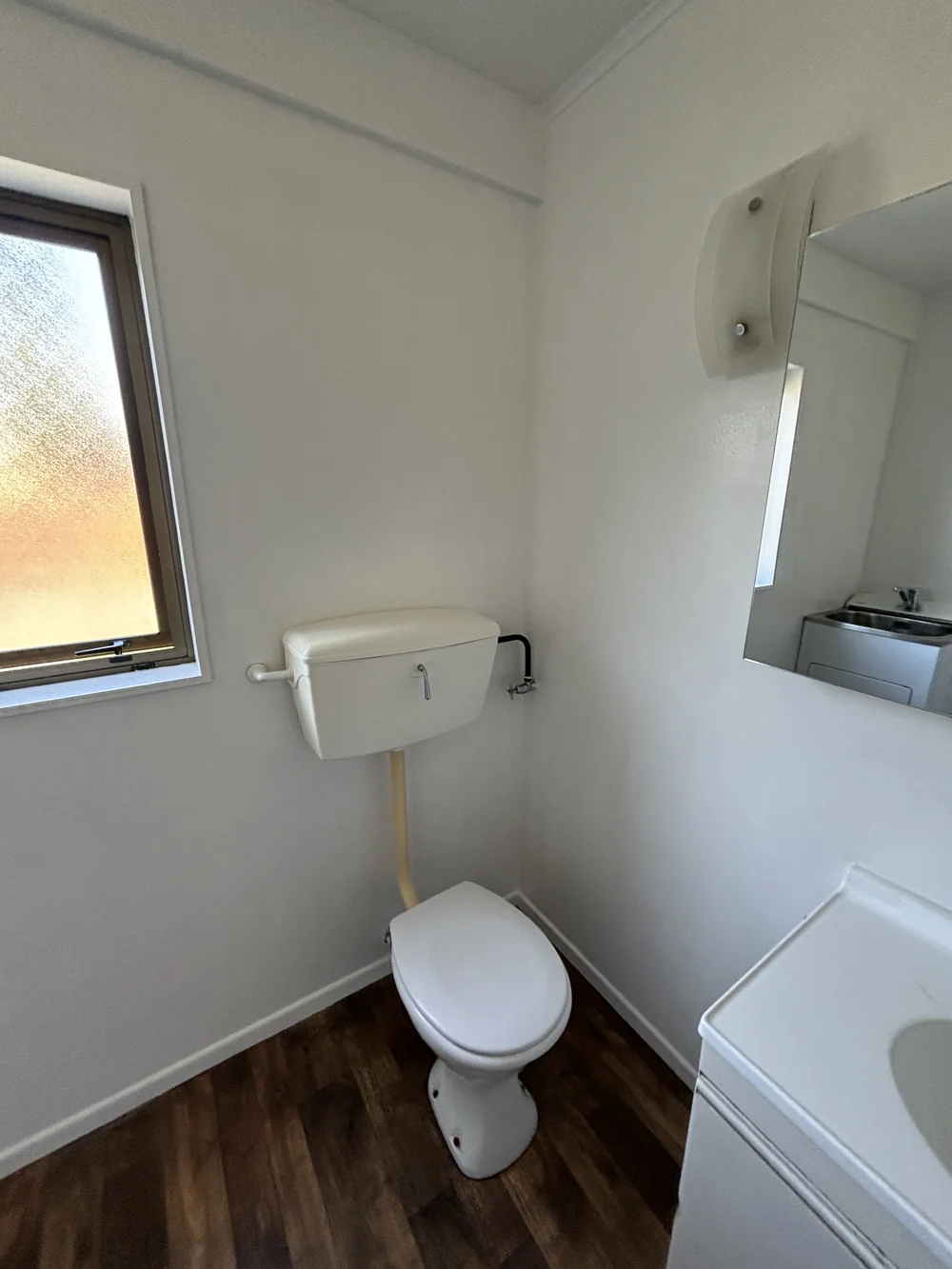
Before-and-after photographs of a New Plymouth bathroom, showing the mould-affected walls around the toilet and the finished room afterwards.

BeforeVisible mould on the walls around the toilet.
Before: extensive mould spotting on the bathroom walls behind and beside the toilet.
AfterThe finished bathroom, shown from a wider angle.
After: clean white walls around the toilet, with the window, mirror and vanity visible.

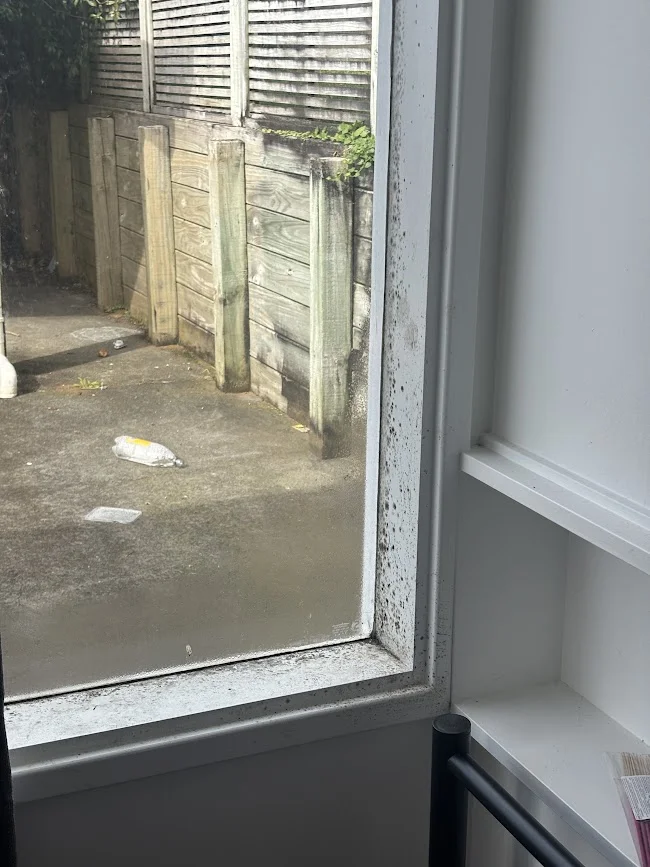
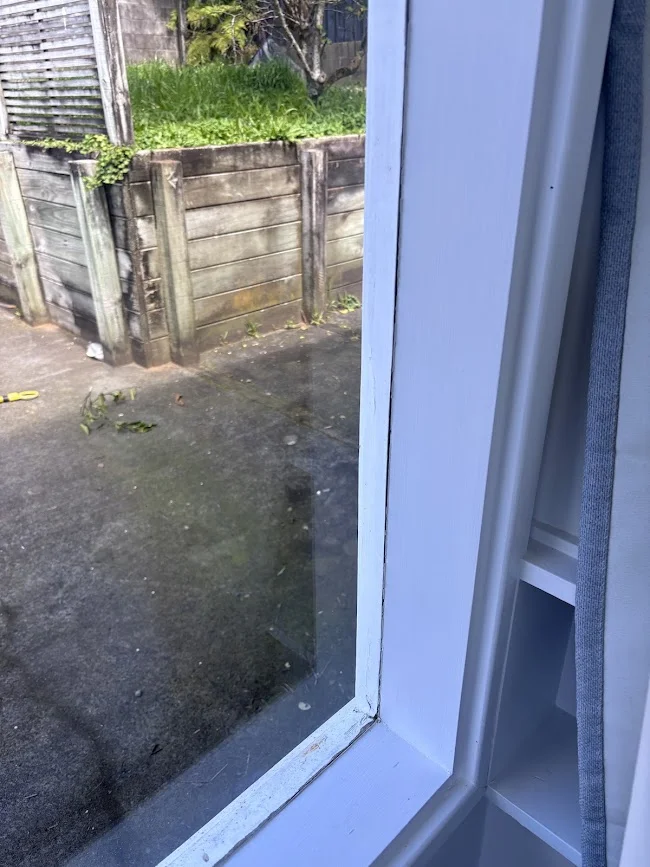
Bedroom window frame: before and after

Poor ventilation was identified as a contributing factor in this example.

BeforeMould along the frame and lower sill.
Before: dark mould spotting along the white bedroom window frame and lower sill beside the glass.
AfterThe same window frame and sill after the work.
After: the same white bedroom window frame and sill, with the earlier dark mould spotting removed.

Window frames and sills can be included in the agreed treatment scope. We consider ventilation and moisture conditions alongside cleaning, treatment and any associated repairs. See ventilation concerns and next steps →

Carpet mould treatment: before and after

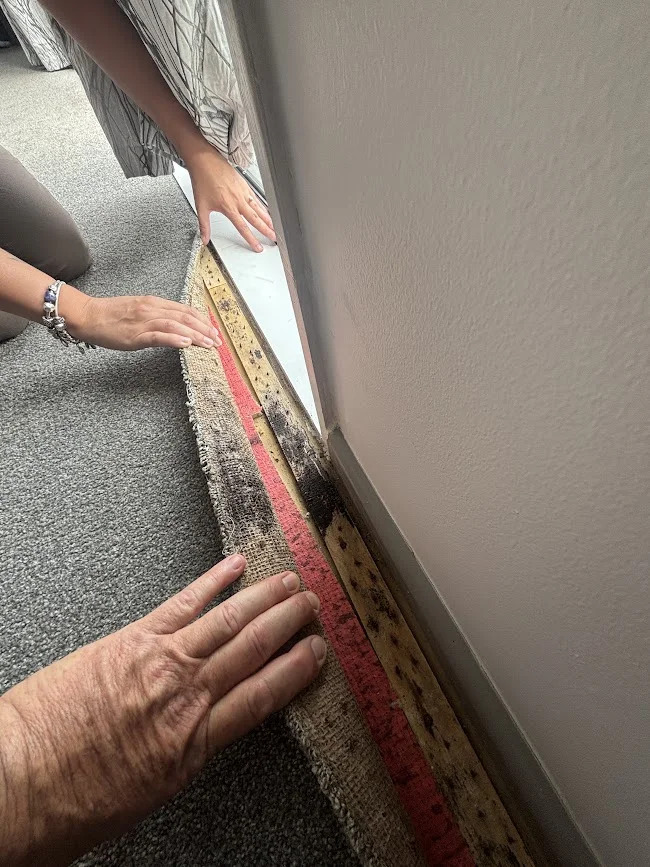
BeforeThe carpet edge lifted to show the affected area.
Lifted carpet edge revealing dark patches beneath it beside a glazed door.
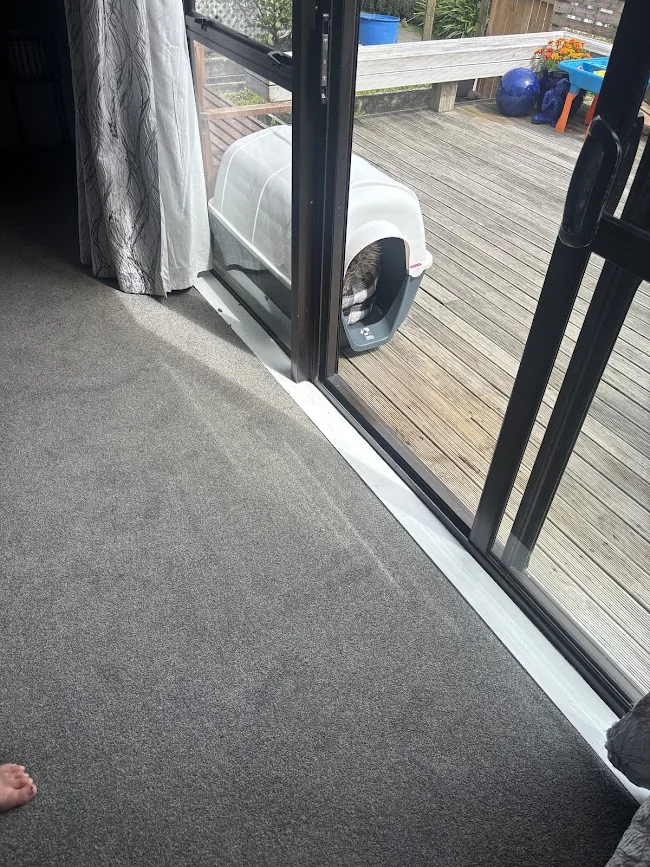
AfterThe carpet back in place after treatment. This view does not show the underside.
Carpet back in place beside glazed doors after treatment.

Exterior mould treatment

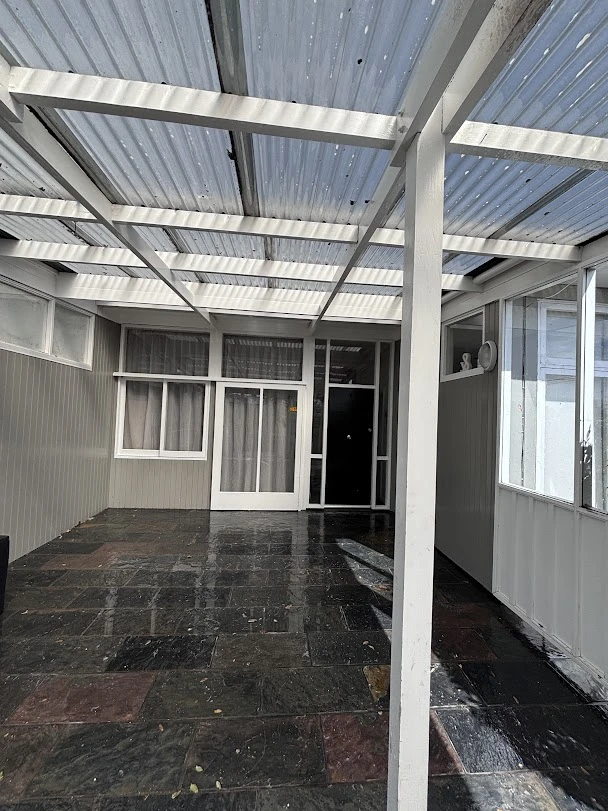
We also consider mould treatment on suitable exterior surfaces, including covered entrance and patio areas. We assess the surface condition, access and extent of growth before quoting suitable treatment and cleaning.

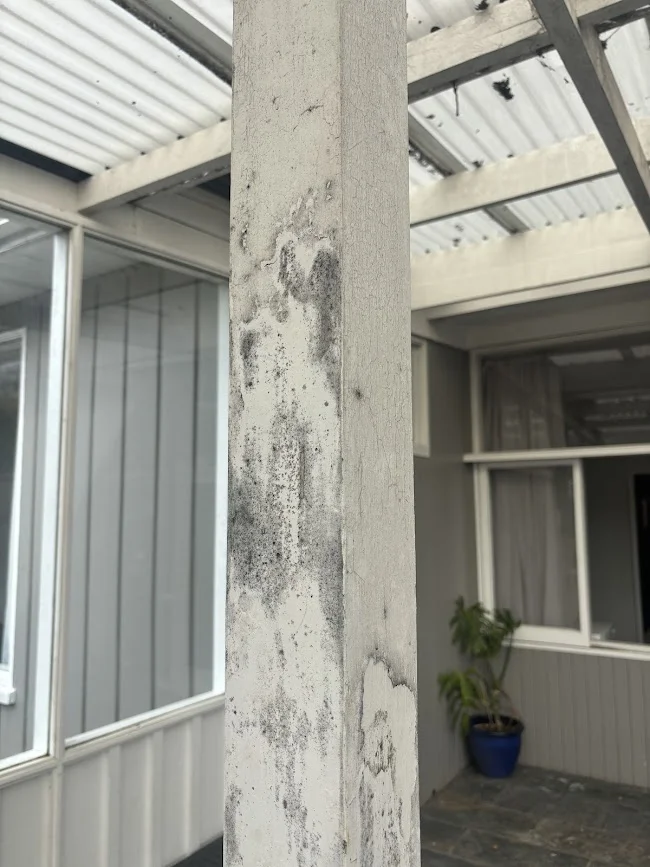
Dark mould growth and peeling paint on a post beneath a covered entrance patio.
Before - A real example of exterior mould growth on an entrance patio post, with deterioration of the painted finish.
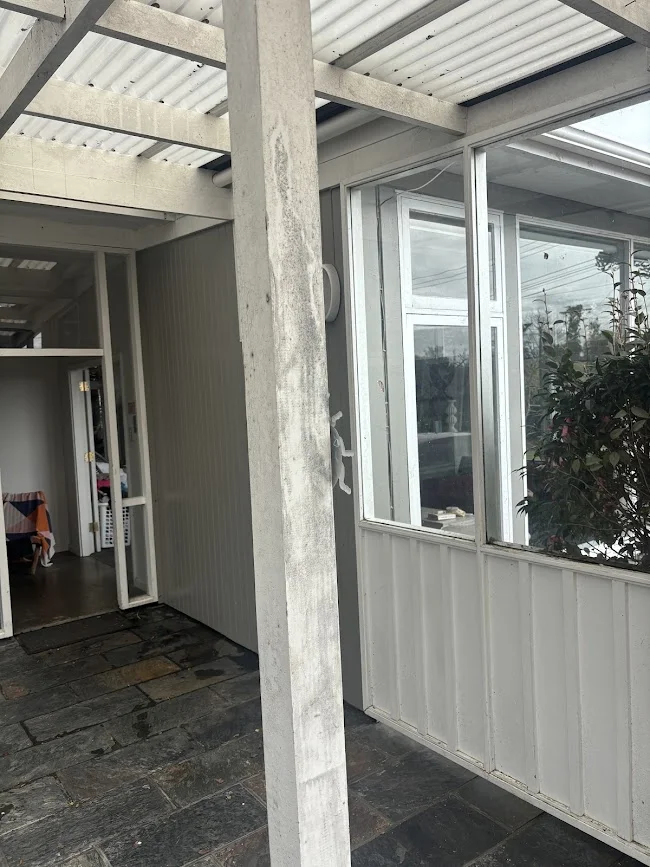
A wider view of the covered entrance patio, showing discolouration along a painted post and overhead beams.
Before - A second view of the entrance patio, showing the affected post and surrounding covered area.
After exterior mould treatment: the covered entrance patio with white posts and overhead beams.
After - The covered entrance patio following exterior mould treatment.
More examples of mould-affected surfaces

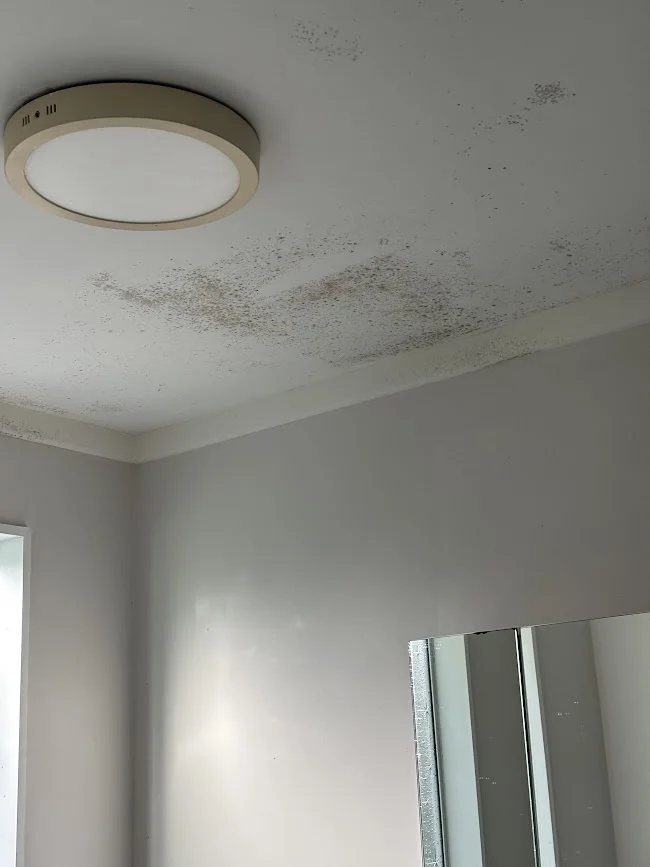
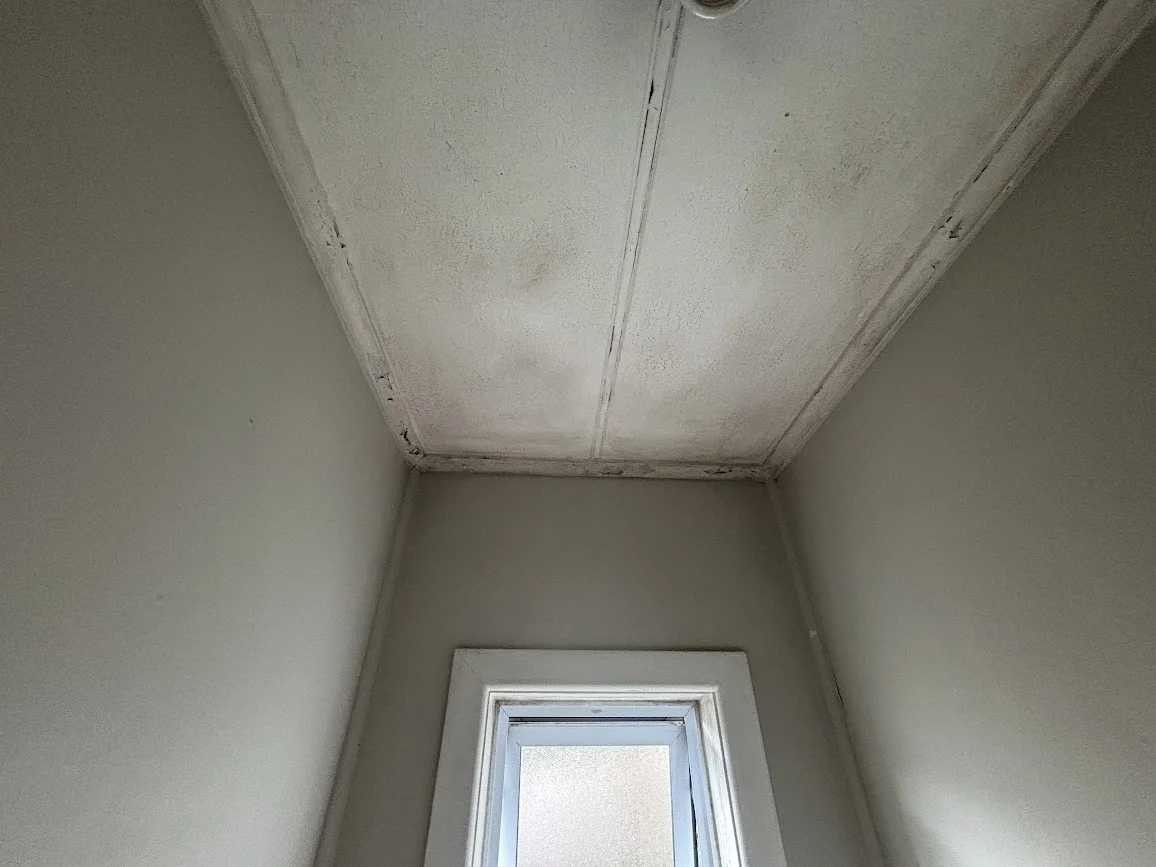
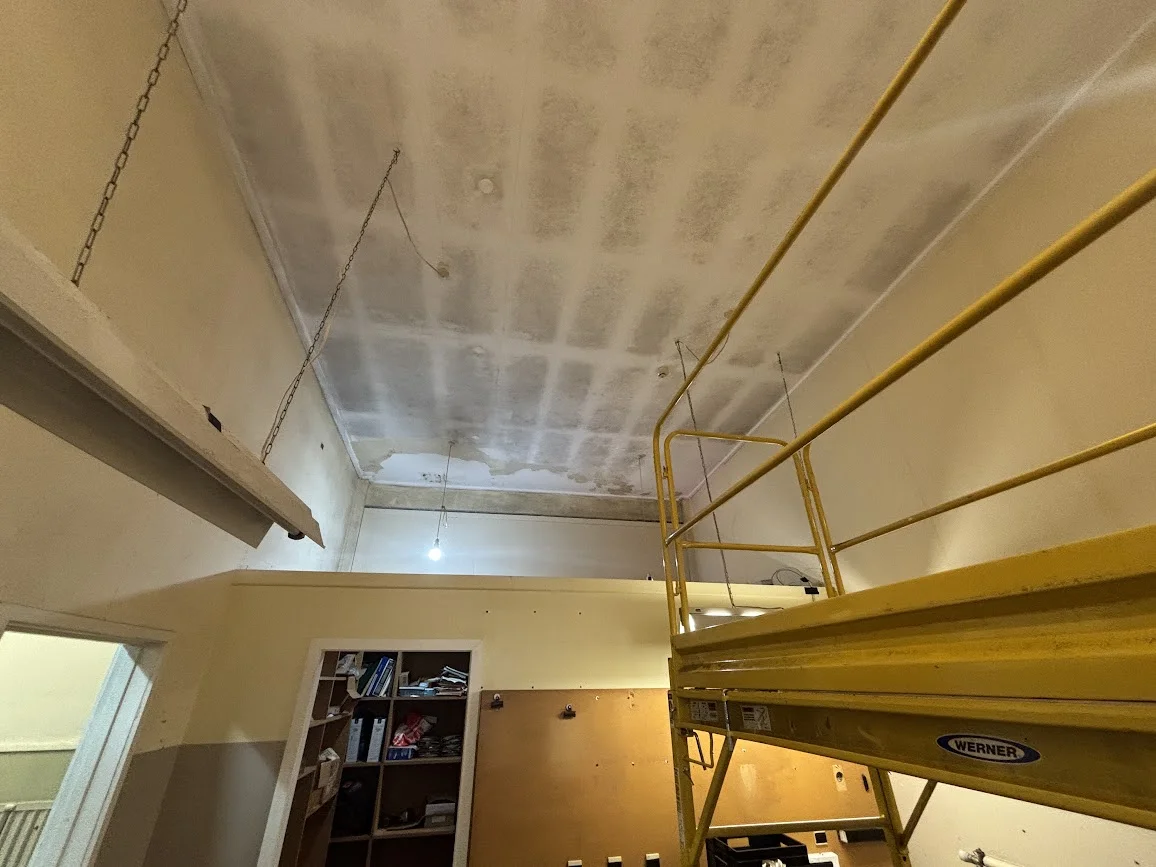
These photographs document the conditions encountered, rather than completed results.

Mould on bathroom and toilet ceilings

Scattered dark mould patches across a bathroom ceiling near a round light fitting and along the cornice.
A real bathroom example showing mould across the ceiling and along the cornice.
Mould spotting across a toilet ceiling and dark patches along the cornice above a small frosted window.
Mould affecting a toilet ceiling, with darker patches along the cornice.

Mould in a commercial space

Widespread discolouration across a high commercial ceiling, with a yellow scaffold platform below.
A real commercial-space example showing mould contamination across a high ceiling.

Mould at a rural property

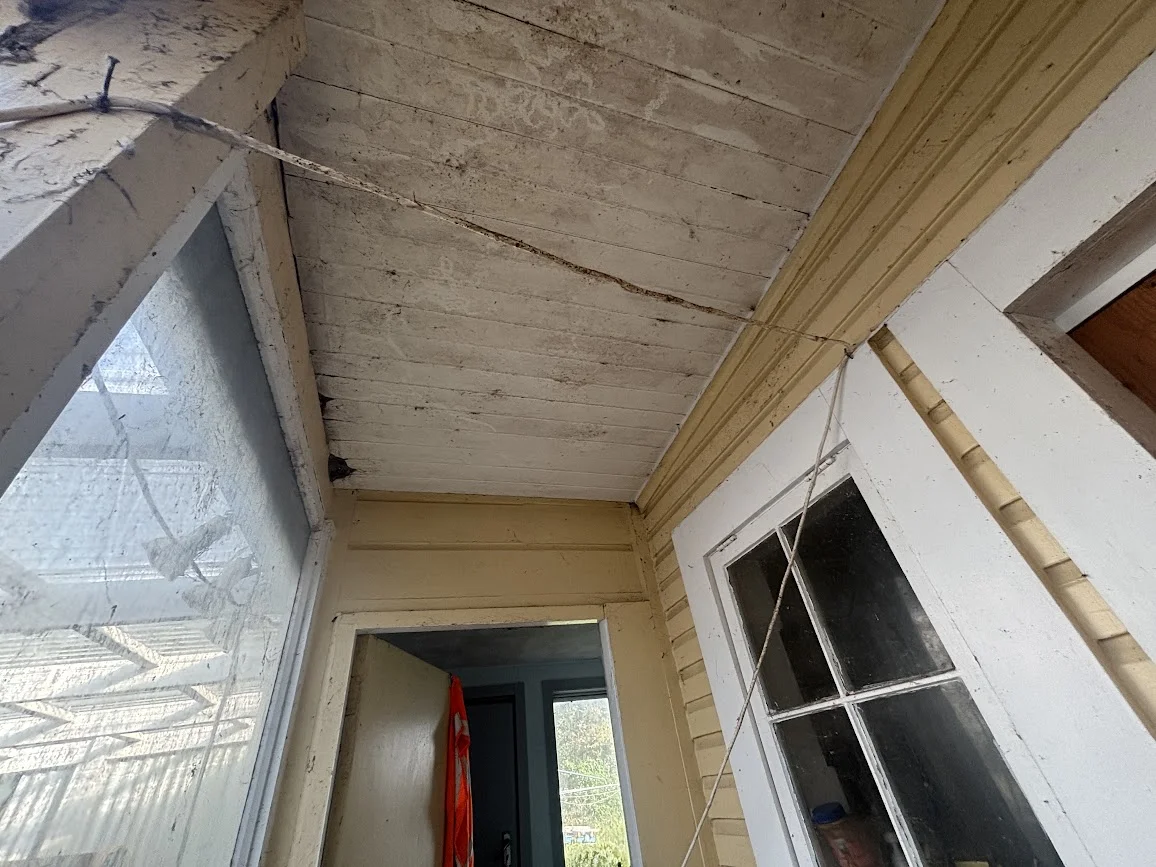
Mould spotting and discolouration across a painted timber ceiling in an enclosed porch at a rural property.
A real rural-property example showing mould on a painted timber ceiling.

Interior mould: a closer view

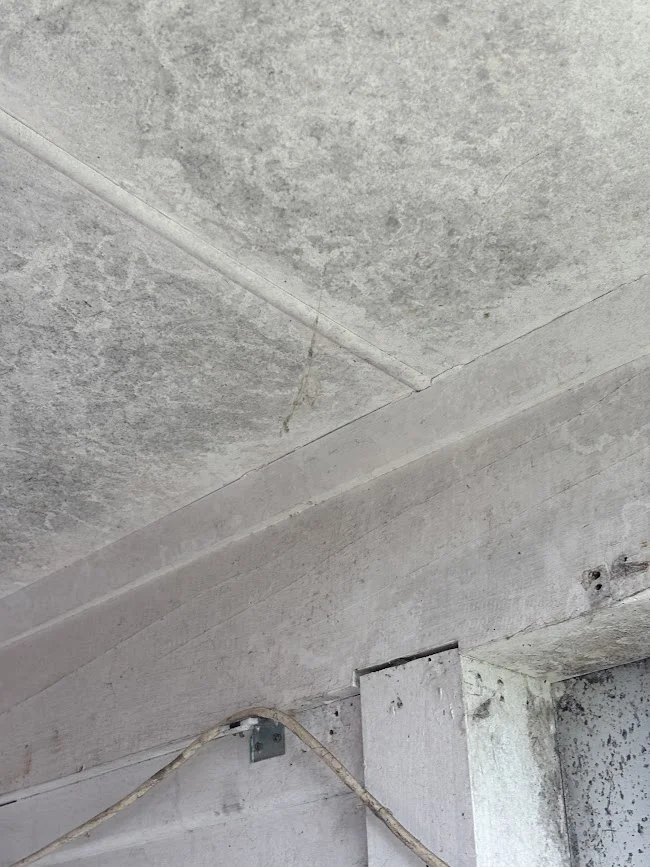
Dense grey mould spotting across an interior ceiling, with dark patches on adjacent painted timber and trim.
A close-up example of mould affecting an interior ceiling and adjoining painted timber.

FAQ - Questions about this service

Recognising mould

Is my house mouldy?

It needs checking. Staining or a smell alone does not confirm mould.

Wondering whether mould is growing in your home? Signs worth checking include:

  • Visible spotting or fuzzy patches on walls, ceilings, skirting or other surfaces.
  • A persistent musty smell, even when no growth is obvious.
  • Patches that return after cleaning, or damp and water-damaged areas following a leak or flood.

Staining or a smell alone does not confirm mould. A laboratory surface test can help establish whether a sampled patch contains mould and identify what is present in that sample.

A surface result describes the sampled spot; it does not check every room or concealed area. A visual and moisture assessment can help investigate the extent of growth and moisture conditions alongside your chosen surface tests.

Explore DIY laboratory mould testing →

Guidance: EPA - finding mould and moisture (opens in a new tab).

Can I manage a small patch of mould at home?

Sometimes. It depends on the surface, extent and conditions.

A small patch on a sound washable surface may be manageable with suitable precautions and moisture control. Recurring growth, wet porous materials, flood contamination and hidden damage need a different assessment. Painting over it does not deal with the cause.

Ask about recurring growth or damaged materials →

Testing and assessments

Do I need mould testing or an on-site assessment?

Choose surface testing to learn about the sampled growth. Choose a building assessment to consider visible moisture damage, material condition and repair options. You can request testing without explaining your private reason.

A thermal camera does not see mould through walls, and neither a test nor a property report diagnoses symptoms or certifies medical safety.

Explore DIY laboratory mould testing →

Explore on-site mould assessments →

Sources: HealthEd - mould after flooding (opens in a new tab); CDC/NIOSH - mould testing and remediation (supplementary guidance) (opens in a new tab).

Can you test what type of mould it is?

Yes. Different moulds can look similar. Colour or a photograph cannot reliably identify the type or tell you its health risk. The affected surface, moisture and extent of growth help determine what to investigate and what work may be needed.

Yes. Our nationwide DIY postal kit is for separately labelled surface samples sent for laboratory analysis. Choose one to 100 sampling spots and follow the instructions supplied for your confirmed kit. We provide the laboratory findings for the samples tested. The result is not a whole-property clearance or a medical diagnosis.

Explore types of mould in New Zealand homes →

Treatment and repairs

Does my home need mould cleaning, repairs or both?

It depends on whether the affected materials can stay or need repair or replacement.

Mould cleaning is for affected surfaces that can stay. Mould and damp damage repairs are for damaged walls, ceilings or finishes that need repairing or replacing. Some homes need both. We look at the problem and explain what we recommend before quoting.

Suitable repairs and repainting can be included in the agreed quotation. Damaged materials may need replacement before finishing.

Explore mould and damp damage repairs →

Can I ask for treatment without a large repair job?

Yes. Tell us about the visible growth and affected surfaces. We can discuss a treatment scope; substantial repairs are not automatically needed.

Is mould treatment just spraying the area?

No. The agreed scope can include physical cleaning, suitable treatment and drying, with protection and HEPA vacuuming where appropriate. The approach depends on the surface and conditions.

What products do you use to treat mould?

We use professional Actichem products selected for the surfaces and work required. Where suitable, a protective treatment can help discourage mould regrowth, alongside addressing the moisture conditions.

Preventing mould returning

Why does mould keep returning?

Moisture conditions may still be supporting the growth.

Treatment is matched to the affected surfaces and extent of growth. Tell us where mould appears, when you first noticed it and whether it returns after cleaning.

Mould spores occur naturally in indoor and outdoor air. Ongoing moisture or cold surfaces may still be contributing. Missing or poorly fitted insulation, condensation, limited airflow and leaks can all warrant investigation. Cleaning alone does not correct these conditions. A fan being present does not, by itself, tell us how effectively moisture is being removed. We consider the pattern and explain when further investigation is needed.

Consider heating, extraction, insulation and water entry together. Tell us when the room becomes wet - overnight, after showers, during cooking or following rain - and what you have already tried. We consider building conditions and reported household use together, explain observations and uncertainty, and agree suitable next steps.

Depending on the findings, your quotation can include suitable treatment, drying, selected damage repairs and repainting. Ventilation concerns are flagged for you to discuss with a separate specialist. Related treatment, repairs and finishing are included only where agreed in the quotation. Ongoing moisture still needs attention to support a lasting improvement. Treatment alone cannot keep mould away if those conditions remain.

Everyday heating, ventilation and moisture guidance →

Ventilation concerns and next steps →

See mould and damp damage repairs →

See ceiling preparation and repainting →

What should I do after mould treatment?

Use this checklist alongside your quotation, invoice or assessment report. Follow the room-use, drying and product instructions agreed for your particular job.

  1. Follow the agreed room-use instructions. Keep people and pets out of restricted areas until the agreed conditions for using the room again are met. Follow the ventilation and drying instructions supplied for the work.
  2. Keep a record. Retain the agreed scope, invoice or report, relevant photographs and care instructions. Note any repairs or further investigation still outstanding.
  3. Watch for returning moisture. Check previously affected areas for condensation, dampness, new patches or a persistent musty smell. Record where and when you notice a change.
  4. Address leaks and maintenance. Report active leaks and faulty extraction promptly. Cleaning does not repair water entry. For a rental, tell the landlord or property manager about the concern.
  5. Manage everyday moisture. Use working kitchen and bathroom extraction, ventilate where practical and consider how washing is dried. Discuss continuing cold surfaces, condensation or ventilation concerns.
  6. Contact us if the concern returns. Send your job or report reference, dated photographs and a short description of what has changed. We will discuss the appropriate next step and agree the scope and any cost before additional work.

Returning mould alone does not establish its cause. Further moisture investigation or repairs may be needed. Your agreed job instructions remain important alongside this general checklist.

Discuss aftercare or returning mould →

Can missing wall insulation cause mould patterns?

Yes. Missing or poorly fitted insulation can leave colder wall areas where moisture supports mould growth. Differences between framing and the spaces between it can produce bands or patches, but the pattern alone cannot confirm the insulation condition. Consider insulation, heating, ventilation and any leaks together. See the laundry example above for an explanation.

Rental homes and insurance

Mould in a rental home?

Start with the cause and the relevant tenant, landlord or property-manager responsibilities.

For tenants, landlords and property managers: understand your responsibilities, what evidence helps identify the cause, and who may need to pay. Mould alone does not establish fault.

Tenant and landlord mould responsibilities - read the guide →

Can I share the findings with my insurer?

Yes. Repair quotations are free. Findings and likely contributing conditions are included on the invoice after a mould-cleaning job. A standalone mould investigation and written assessment report is a separate paid service. Your insurer decides what evidence they require and whether damage is covered.

Start an enquiry

Tell us about the mould

Describe the affected surfaces, how long the growth has been present and whether it returns after cleaning. Photos help us discuss the next step.

North Island reference map with Taranaki labelled on the west coast.
Mould removal and repairs across Taranaki.

Across Taranaki

Mould removal and repairs across Taranaki

Mould removal and moisture-damage repairs throughout Taranaki, including towns, smaller communities, farms and rural properties.

New PlymouthStratfordHāweraŌpunakeInglewood

Tell us your town or postcode and the work you need. We’ll agree access, travel and visit arrangements for your property.