


Healthy & Dry - Mould & Moisture RepairsHealthy & Dry

Ask AI - Search

Typing stays in this open page and is not saved. Only submitting an AI question sends and saves it.

Nationwide DIY mould testing

DIY lab mould testing

Find out if it’s black mould in your home?

Have your mould sample analysed and receive a laboratory report as a starting point for investigating mould in your home.

Mould growing indoors needs attention, no matter what colour it is.

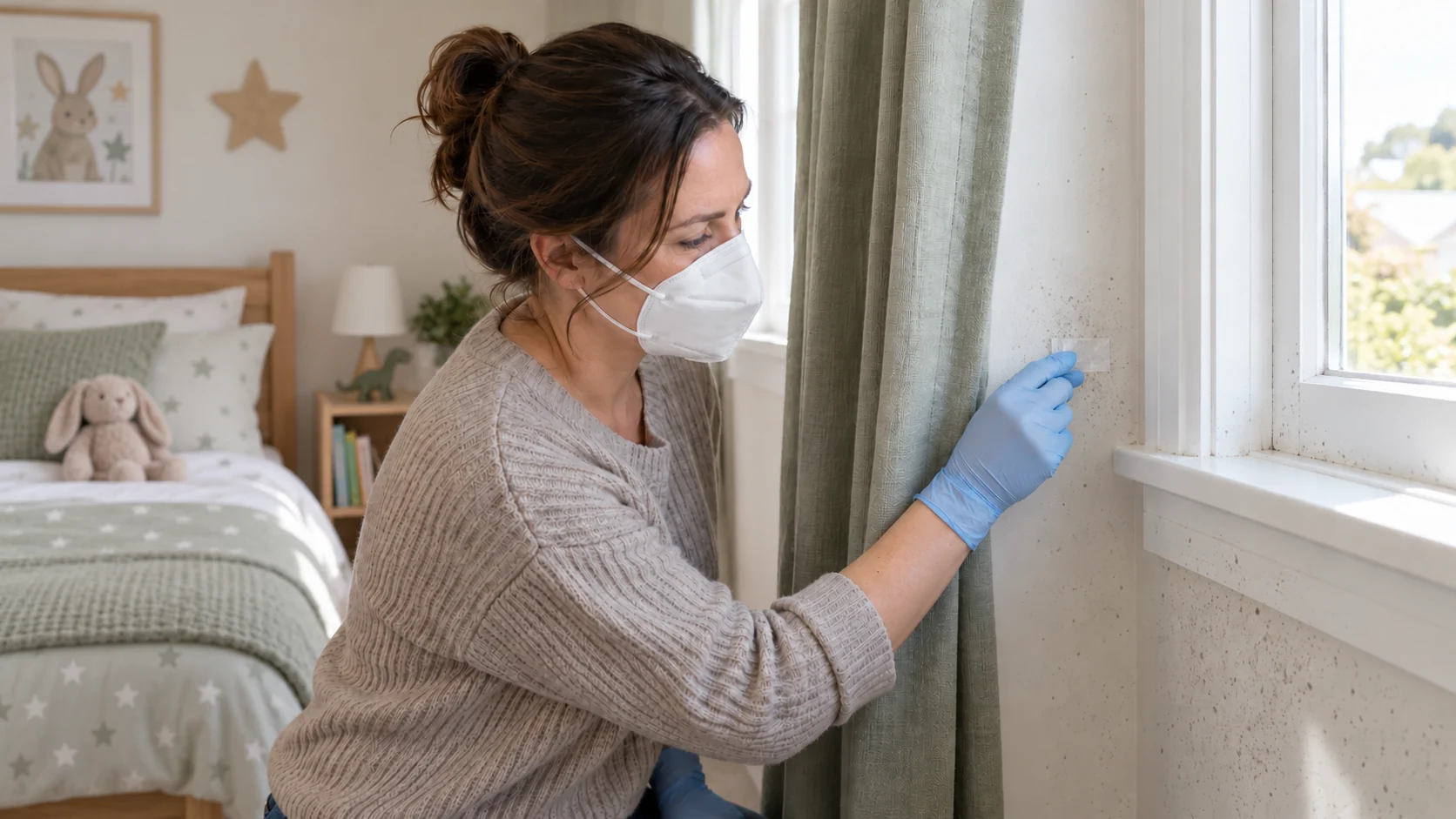
An adult wearing gloves and a protective mask collects a mould sample beside a window in a child’s bedroom, with star-patterned bedding and a soft toy in the background.

Kit, laboratory analysis and report

Order your nationwide DIY lab mould test

From NZ$215 (including GST)
For the first sample.
Add more samples for $100 each.

Your laboratory report and standard courier both ways are included.
Rural delivery +$10 · Card payment +2.65%.

Payment options

Visa Mastercard Apple Pay Google Pay Afterpay - coming soon Klarna

Klarna for eligible personal purchases · Afterpay coming soon

Why people choose mould testing

Understand the mould you’ve found and take the next step with confidence. Our nationwide DIY kit combines laboratory analysis with a written report and practical, plain-English guidance.

Mould in your home

Why test for mould I can already see?

Identify the mould in your sample, with a plain-English explanation of its known characteristics, general health concerns and practical next steps.

The test does not measure your exposure or determine your family’s health risk.

  • Understand the findings. The laboratory identifies mould groups where possible and describes the fungal material collected. Healthy & Dry provides the original report and a plain-English explanation of known characteristics and general health concerns, where reliable information is available.
  • Explore possible contributing conditions. We explain the materials and moisture conditions commonly associated with the mould identified, where reliable information is available. This can guide further investigation, but the sample alone cannot establish whether the moisture comes from condensation, a leak or another source.
  • Keep a written record. Share sample-specific findings with an owner, property manager, insurer or adviser. Check their evidence requirements before collecting.

It does not diagnose illness or assess the health of an entire property. Visible mould and dampness should be addressed without waiting for laboratory identification.

Concerned about mould in your home?

A surface test can describe the sample; it cannot assess your health.

For personal health advice, speak with your GP or call Healthline.

Mould and respiratory health

Damp and mouldy indoor environments are associated with respiratory symptoms, allergies and asthma.

Mould can trigger asthma symptoms, particularly in people with sensitive airways. Addressing mould growth and finding and fixing its moisture source are important steps towards a drier home.

Sources and further reading: Cardiac and Respiratory Foundation NZ (opens in a new tab) · World Health Organization (opens in a new tab).

Does the mould keep coming back after cleaning?

Returning growth may need its moisture conditions investigated as well as the sample identified.

Get laboratory findings for patches that return after cleaning, or compare separate spots in your home.

Have you found mould after a leak or flood?

Laboratory findings can document sampled growth after water damage.

Get a laboratory record of suspicious growth after water damage, alongside your photos and damage records.

Rental homes and insurance

Need laboratory findings for mould in your rental?

Yes. Moisture from everyday living, building conditions or both may contribute. A laboratory test identifies mould in the sample you collect and gives you findings to share with your landlord, tenant or property manager. It cannot establish the moisture source or who is responsible; finding the cause requires an investigation of the property.

Do you need mould test results for an insurance claim or dispute?

It depends on the recipient’s evidence requirements. Check before collecting samples.

Add laboratory findings to your supporting records. Check the recipient’s sampling and documentation requirements before collecting.

Buying or selling a home

Buying or selling a home? - Pre-purchase due diligence

Surface testing can provide sample-specific findings for pre-purchase due diligence.

Laboratory analysis of surface samples can provide findings for pre-purchase due diligence when buying or selling a home. The findings relate to the samples collected and do not assess the condition of the whole property.

01 · Choose your kit

How many separate spots would you like to sample?

You can take more than one sample in the same room. Different surfaces or separate patches can be recorded individually.

The first sample is $215 and each additional sample is $100, including GST. Your total and room fields update together. For more than 100 samples or special requirements, ask about a custom kit.

FAQ - Questions about DIY mould testing

Kit, prices and delivery

How much does mould testing cost in NZ?

The total kit price is $215 for one sample, plus $100 for each extra sample, including GST. Kit and standard courier both ways included. Rural delivery adds $10 including GST ($5 each way). The planner supports 1–100 samples.

Compare sample quantities and kit totals →

What is included in the kit price?

The kit includes sampling materials for your selected quantity, approved collection and labelling instructions, laboratory analysis of each separate sample, the original laboratory report and a plain-language explanation tied to your locations. Kit and standard courier both ways included. Rural delivery adds $10 including GST ($5 each way). Complete the application to prepare your Xero invoice and continue to secure payment. See kit inclusions →

Can I have the mould test kit delivered anywhere in New Zealand?

Yes. Our postal surface-sampling kits are available for New Zealand addresses, including rural properties. The delivery address can differ from the property being sampled. Kit and standard courier both ways included. Rural delivery adds $10 including GST ($5 each way). Choose your kit →

Ordering and collecting samples

How does the DIY mould-testing process work?
  1. Choose and pay

    Choose how many separate spots you want analysed and see your total. Complete the kit application and select Buy my mould kit to prepare your Xero invoice, then continue to secure payment. Keep your kit reference.

  2. Complete your private property plan

    After verified payment, open your personal link. Your earlier details carry forward; add your rooms or areas and any optional concerns. Progress saves so you can return later.

    Complete this plan before we prepare your kit for dispatch.

  3. Collect and return

    Follow the instructions supplied with your kit. Record each exact spot against its numbered sample and return your samples together.

  4. Receive your findings

    Get the original laboratory report by email, with a plain-language explanation linked to your recorded locations.

The property plan organises your kit. It does not buy extra analyses. Exact collection details are recorded when you sample, using the supplied instructions and matching paperwork.

Dispatch, laboratory receipt and results are recorded by our team; contact us with your kit reference for an update.

Can I collect a sample myself and send it to a laboratory?

Yes. That’s exactly what our DIY mould test kit is for. Collect samples from your chosen surfaces using the materials and instructions supplied with your kit, then return separately labelled samples to the laboratory for analysis. Read about collection and labels →

Choose your sample quantity, complete the kit application and select Buy my mould kit. Continue to your Xero invoice for secure payment. After payment is verified, complete your private property plan using your personal link. We prepare your kit after that plan is complete.

How many samples should I take?

Consider the separate patches, surfaces and moisture histories you want information about. Several spots can be in the same room. Keep each chosen spot separately labelled so its result can be matched to the correct location. You choose the quantity; the form helps organise it. See how to plan your sampling spots →

Should ceiling mould and skirting mould be sampled separately?

Usually, where the ceiling and skirting are distinct sampling spots.

A lower wall or skirting affected by a reported leak and a ceiling with reported condensation are distinct spots. Separate samples let the laboratory report on each. Different materials or moisture histories may support different moulds, but location alone cannot establish this, and several types may occur in one patch. Read the same-room sampling example →

What if a spot is unsafe or difficult to reach?

Ask for suitable assistance rather than trying to reach an unsafe spot.

Our mould-testing service uses DIY postal kits nationwide. If a spot is unsafe or difficult to reach, ask a local builder or suitably qualified tradesperson for assistance. Follow the collection instructions supplied for your confirmed kit. Read about safe access and unsuitable surfaces →

Laboratory findings and timing

What the laboratory looks for

Your tape-lift sample is examined under a microscope to identify the mould groups present and describe the fungal material collected.

Findings for each sample

  • Mould genera identified where possible
  • Reported condition of the fungal material
  • An indicative count of fungal structures per square centimetre
  • A separate result matched to the sample reference you supply

A report you can use

Keep the original laboratory report alongside Healthy & Dry’s plain-language explanation and your sample-location record.

These findings describe the submitted surface samples. They do not measure room air, identify the building’s moisture source or provide whole-property clearance.

What will the laboratory report tell me?

It reports what the laboratory can identify in the submitted sample, which may be a mould group or genus rather than an exact species. We provide the original report with your location summary. Where reliable information is available, Healthy & Dry also explains the materials and moisture conditions commonly associated with the mould identified, to help guide further investigation. This guidance does not establish the moisture source in your property. A surface result does not measure room air, certify the whole house, diagnose illness, establish toxin exposure or confirm structural condition. Read what the results cover →

See example report fields →

What does the laboratory report include?

Demonstration only

How your sample findings are recorded

Example fields, not a laboratory-issued report. The laboratory supplies the actual findings and report format. No test result is represented below.

Sample reference
Example: DEMO-S1, linked to the sample label.
Recorded location
Example: laundry ceiling. This is the location supplied with the sample.
Laboratory findings
The mould groups or genera identified, with the findings and qualifications reported by the laboratory. Identification may not reach an exact species.
Result notes and limits
The laboratory's notes about the submitted material, method and identification limits. A surface sample represents the material collected from that spot.
Healthy & Dry explanation
Our separate plain-language explanation connects the findings to your recorded locations and suggests questions for further investigation. It does not establish the property's moisture source, diagnose illness or provide whole-house clearance.

You receive the original laboratory report, not this demonstration layout.
Can testing identify black mould?

Sometimes. Identification depends on the collected sample and the laboratory’s limits.

Not all mould that appears black or dark is the species commonly called toxic black mould, Stachybotrys chartarum. Appearance cannot establish species or toxin production. Read about black mould →

What is the difference between surface testing and air testing?

Surface testing examines material collected from a chosen patch. Air testing uses a different collection method and sampling plan to examine airborne material. Our postal kit is for surface samples; professional air testing is a separate specialist enquiry. Read about surface and air samples →

Laboratory, method and expected timing

This service uses SCAADA NZ in Hamilton for direct microscopy following ASTM D7658. Its quoted analysis includes preparation, analysis and reporting.

SCAADA currently advises a usual turnaround of 2–3 days after laboratory receipt. Courier time is additional; this is an estimate rather than a guaranteed delivery date. For urgent work, contact Healthy & Dry before ordering so availability, timing and the customer charge can be agreed.

If the report is for an insurer, landlord or dispute, check the recipient’s sampling and reporting requirements before collecting.

Can I request faster results?

Yes. Please email info@healthydry.co.nz before ordering to request urgent laboratory processing. A surcharge applies. We’ll confirm laboratory availability, turnaround and the extra cost with you before arranging it.

Choosing and planning your test

Not sure whether this kit is right for you?

A real conversation when you need one

Ask Healthy & Dry about your sampling question before ordering. You do not need to use AI or explain your private reasons to choose a kit.

Ask about mould testing →

0800 111 944

Monday–Saturday, 7am–5pm
Sunday closed for phone enquiries
Order kits online anytime

Nationwide postal surface-sampling kits. No public shopfront or walk-in collection.

Help with planning your mould test

Related guidance and repairs

What if there is a musty smell or suspected hidden mould?

A musty smell or suspected hidden growth may need a separate property investigation.

You may be concerned about growth behind a lining or beneath flooring, even when nothing is visible. You can choose surface testing for accessible patches. A separate property investigation can help explore suspected hidden growth through visual inspection, moisture assessment and specialist sampling where appropriate. A postal surface sample cannot locate concealed growth or measure room air. Ask about an assessment.

Can mould testing help check work after cleaning or removal?

Yes. You may want a documented follow-up after treatment, repairs or mould removal. Sampling can be part of a professionally planned verification process, with locations, timing and the questions to be answered agreed beforehand. An isolated DIY sample does not provide whole-property clearance. Discuss a verification enquiry with us.

Rentals and insurance

Can I request testing for a rental property or insurance claim?

Yes. You can request testing for a rental concern, insurance enquiry, building dispute or property decision without explaining your private reasons. If another recipient will use the report, check their method and documentation requirements before collecting. Testing alone does not establish fault, insurance cover or Healthy Homes compliance. Mould test reports and documentation guide →

Does my insurer or adviser require independent collection?

It depends on the recipient. Confirm their requirements before sampling.

Ask the recipient before sampling. They may require a specified independent collector, particular method, photographs or a report format. You can tell us the requirement without disclosing the underlying matter. Check that a DIY sample meets the recipient’s collection and reporting requirements before collecting. Use the collection-requirements checklist →

Privacy and ordering help

Do I have to explain why I want testing?

No. You can choose a test without explaining your private reason. The questions help record your sample locations and collection needs. Recipient method or report requirements are optional.

Do I need photographs or AI to order a kit?

No. The application records your planned rooms or areas without photographs or AI. Exact sampling spots and collection details will be recorded later.

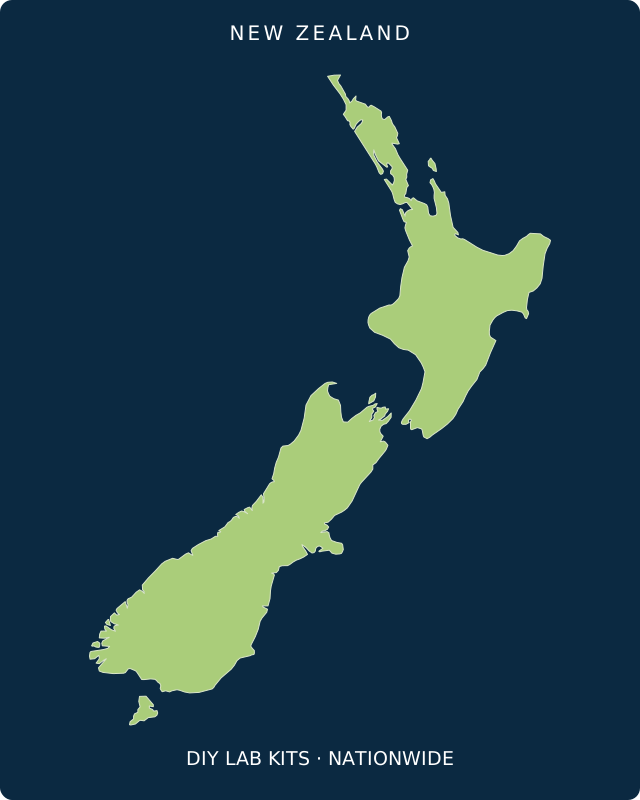
New Zealand reference map showing the North and South Islands.
DIY laboratory mould test kits are available nationwide.

Across New Zealand

DIY laboratory mould test kits nationwide

Order a DIY postal mould test kit from anywhere in New Zealand. Collect your selected surface samples at home and return them for laboratory analysis.

North IslandSouth IslandRural delivery

Enter your delivery address when ordering so we can confirm courier arrangements and any rural-delivery charge. This postal kit service is available nationwide.